What is a VMS board and when should one be used?
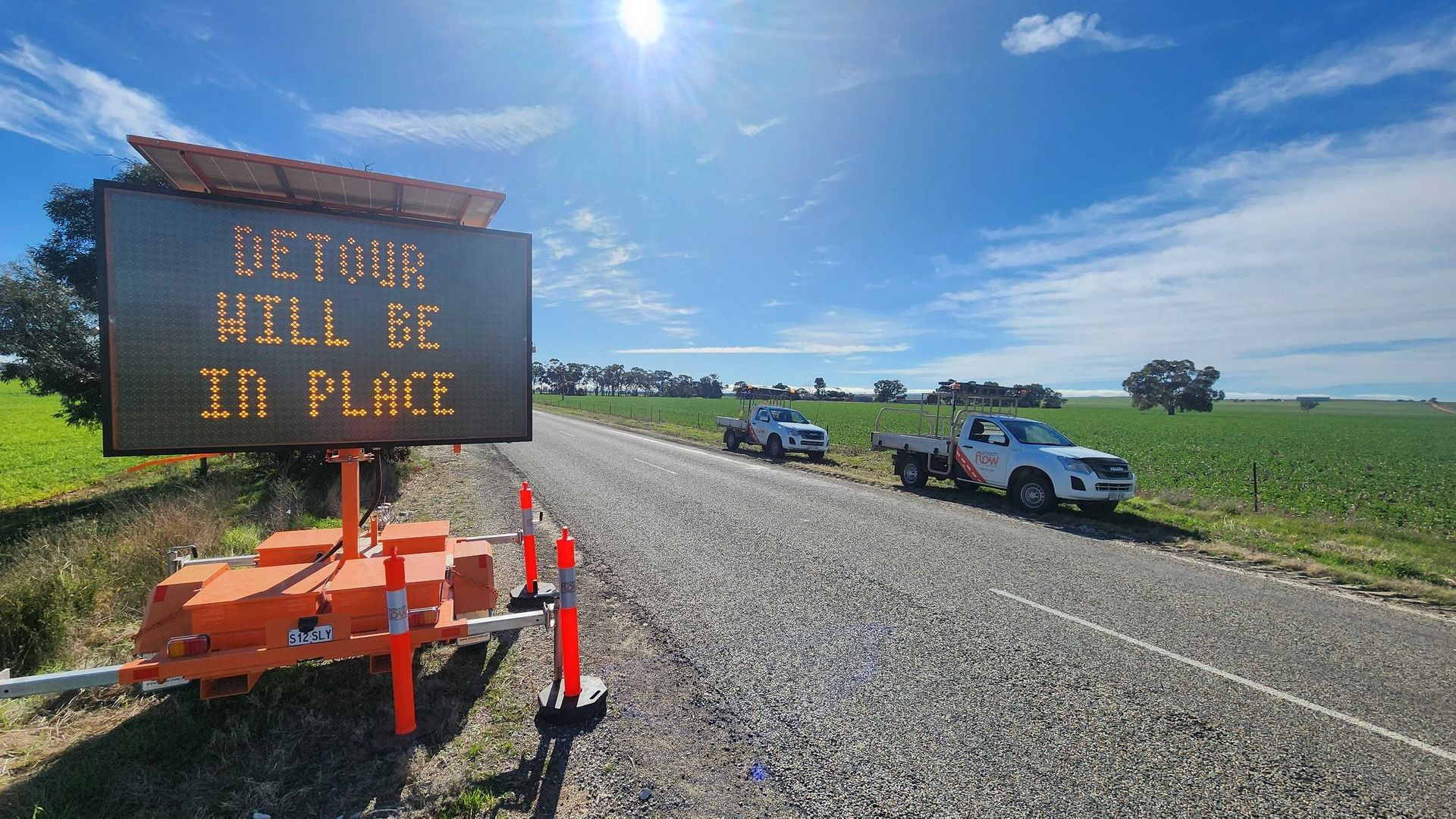
A variable message sign, usually shortened to VMS , is one of the most recognisable pieces of temporary traffic management equipment on Australian roads. The trailer-mounted electronic boards can display changeable messages that warn drivers about upcoming works, closures, detours, delays, changed traffic conditions, events or other temporary situations before they reach the affected area.
Their flexibility makes them useful, but a VMS board is not simply a larger replacement for a conventional road sign. In South Australia, current temporary traffic management requirements treat portable VMS boards as an advance-warning and communication tool that should supplement the wider traffic-control arrangement. The message, location, timing and approval process all matter.
This guide explains what a VMS board is, when one may be appropriate, what it can communicate and what project teams should consider before arranging VMS board hire.
What is a VMS board?
VMS stands for Variable Message Sign . A portable VMS board is typically an electronic LED display mounted on a towable trailer, allowing it to be transported to a roadwork, civil construction, event or incident location and positioned where approaching road users can see the message.
Unlike a fixed temporary sign, the display can be changed as project conditions change. This makes VMS boards useful when the information motorists need is time-sensitive, when several messages need to be displayed at different stages, or when advance notice needs to be provided before a closure or traffic change takes effect.
Smooth Flow Traffic Management supplies trailer-mounted LED VMS boards for South Australian roadworks and civil projects. The boards are designed to provide clear, changeable information to road users and can form part of a broader traffic management equipment hire package.
What are VMS boards used for?
The most useful role of a VMS board is communicating information that drivers need before they reach a changed road environment. South Australia’s current workzone standards state that portable VMS boards are used to provide advance notice of works and should supplement existing roadside infrastructure rather than replace conventional signs or pavement markings.
Depending on the approved traffic arrangement, a VMS may be used to communicate:
- upcoming roadworks
- changed traffic conditions
- lane or road closures
- detour or alternative-route information
- expected delays
- temporary access changes
- event access or parking information
- emergency or incident-related traffic changes
- other approved road-safety messages relevant to the affected section of road
The key point is that the message should help road users make an appropriate decision. It may tell them that conditions are changing ahead, encourage them to select another route before reaching the work zone, or prepare them for a closure, reduced road capacity or other temporary restriction.
When might a VMS board be required for roadworks?
A VMS is not automatically required for every project. DIT’s current Roadworks Portal guidance says the Traffic Management Centre may direct a project to use one, and notes that VMS boards would usually be expected for larger-scale works with a significant traffic impact or works lasting longer than a week.
That does not mean duration is the only factor. A short-duration project can still create a substantial traffic impact if it affects a major arterial road, closes a critical lane, disrupts an intersection or produces queues that road users need to know about before reaching the site.
Likewise, a longer project on a low-volume local road may not require the same level of advance electronic messaging. The decision should follow the traffic risk, the road authority’s requirements and the approved Traffic Management Plan or Traffic Guidance Scheme, rather than relying on a standard equipment package.
VMS boards can provide advance notice before works begin
One of the strongest uses for a portable VMS is communicating a traffic change before the physical work zone is established. DIT’s South Australian workzone standards specifically identify VMS boards as an option for giving road users advance notice of future works.
This can be particularly useful where a project will introduce a full road closure, significant lane restriction, unusual detour, access change or other condition that could catch regular road users by surprise. Giving advance notice allows motorists to change travel time or route before they encounter the restriction.
Advance messaging can also reduce avoidable pressure on the worksite itself. If drivers know several days beforehand that a road will close, some may choose another route before the closure begins rather than arriving at the traffic-control point and turning around.
VMS boards can support road closures and detours
Road closures often create a communication problem beyond the immediate barrier or traffic controller. Drivers need enough warning to make a practical route choice, and the best decision point may be well before the physical closure.
A VMS board can be positioned at an appropriate upstream location to advise road users of the changed condition. This is particularly useful on regional roads, arterial routes and road networks where the next practical detour opportunity may be some distance before the works.
The board itself does not create the detour. The detour still needs to be planned, approved and supported by the required conventional traffic signs and other controls. The VMS is there to reinforce the message and give drivers more time to respond.
VMS boards can communicate changing conditions during longer projects
Construction and roadwork projects frequently move through several stages. A road may operate normally during one phase, move to a lane closure in another, change access points later and eventually transition into resurfacing or reinstatement works.
Because the display can be changed, a VMS can remain useful as the project progresses. The message can be updated to match an upcoming traffic switch, changed closure time or other approved condition without replacing the entire physical sign unit.
This does not mean messages should be changed casually. The board should continue to align with the approved traffic-management arrangement and any road-authority requirements. Where a project change affects the actual traffic-control layout, the TMP or TGS may also need to be reviewed.
Can VMS boards be used for events?
Yes. Portable VMS boards may be useful around events where traffic conditions, entry points, parking arrangements or road access differ from normal. DIT’s Variable Message Signs operational instruction specifically recognises the use of portable VMS for exit and parking information where a special event is likely to affect traffic operations.
For an event, a board might form part of a larger event traffic management arrangement covering road closures, parking access, pedestrian movements, public transport and emergency access.
The VMS should still communicate traffic-relevant information rather than functioning as a general advertising board. Where an event affects public roads, the required approvals and event traffic arrangements should be organised before the signs are deployed.
VMS boards can support emergency traffic management
Unexpected incidents create another situation where road users may need information before they reach the affected area. A crash, flooding event, fallen tree, emergency road closure or urgent repair can change the road environment with little warning.
DIT’s VMS guidance recognises their use for advance warning and diversion around emergency situations where traffic conditions are affected. In these situations, a board may help reinforce a road closure, advise drivers of changed conditions or direct them toward an alternative route.
Emergency traffic management remains dynamic, so the sign message and location may need to change as the incident develops. Smooth Flow’s traffic response services support road-based emergencies including accidents, flooding, breakdowns and road closures across South Australia.
A VMS board does not replace conventional road signs
This is one of the most important distinctions when planning a VMS. South Australia’s current workzone standards state that portable variable message signs should supplement existing roadside infrastructure and should not be used as a substitute for conventional signs and pavement markings.
In practical terms, a VMS can tell a driver that roadworks, a closure or changed conditions are ahead, while the conventional traffic-control signs closer to the site provide the detailed regulatory, warning and directional information required to move safely through or around the work zone.
A project should therefore avoid treating a VMS as a way to reduce the number of required temporary signs. Instead, it should be integrated into the complete traffic arrangement prepared for the site.
What should a VMS message say?
A good VMS message needs to be understood quickly by a driver travelling at road speed. Long explanations, unnecessary wording and complicated instructions reduce the chance that a road user can read and process the message in time.
DIT’s July 2026 temporary traffic management update states that VMS messaging should follow Operational Instruction 2.36, with a maximum of three lines, a maximum of two pages and a three-second interval. DIT’s operational instruction also requires portable VMS messages to be concise and focused on advance warning of changed traffic conditions.
For roadworks, the message may also require approval from the Department’s Traffic Management Centre, the relevant council or their representative. Project teams should not assume they can enter any message they choose simply because the equipment is programmable.
Keep the message focused on the action road users need to take
Useful VMS messaging generally answers one or more simple questions: What is changing? Where is it happening? When does it apply? What should I do?
For example, advance notice may need to tell drivers that a road will close on a particular date, while an active-work message may need to indicate that a detour is in place. The exact wording should be developed within the applicable road-authority requirements rather than copied from another project.
Too much information can be counterproductive. The objective is not to explain the entire project. It is to provide enough approved information for approaching road users to make the required traffic decision safely.
Where should a VMS board be positioned?
Placement is just as important as the message. A VMS needs to be visible early enough for road users to read the display, understand it and act before reaching the changed condition.
Factors that can influence placement include road speed, sight distance, curves and crests, traffic volumes, nearby intersections, driveways, pedestrian routes, existing signs and the point where a driver can realistically choose another route. The trailer itself also needs a safe position that does not obstruct the road, footpath, cycle route or other traffic-control devices.
A board positioned too close to the work zone may provide technically correct information but too late for drivers to use it. Likewise, positioning one among several competing signs or visual distractions can reduce its effectiveness.
When might more than one VMS board be useful?
Some projects affect traffic over a larger area than one message board can reasonably cover. A major closure may influence several approach roads, while an event may have separate arrival routes, parking areas and departure routes.
In these situations, multiple VMS boards may be considered so road users approaching from different directions receive relevant information. The boards should be coordinated so the messages do not conflict and so each sign serves a clear purpose within the wider traffic-management strategy.
Using additional boards should not be treated as a substitute for good planning. More signs are only useful where each provides necessary information at an appropriate decision point.
What should you confirm before arranging VMS board hire?
Before hiring a VMS board, the project team should be able to provide enough information for the required use, location and messaging to be understood. Useful details include:
- project or event location
- road authority
- type and duration of works
- road speed and traffic conditions
- planned closures, lane restrictions or detours
- date the message needs to begin
- expected project stages
- proposed VMS location
- the TMP or TGS where applicable
- whether message approval has been obtained or is required
- whether messages need to change during the hire period
- any remote or regional mobilisation requirements
This information helps avoid treating the VMS as an isolated hire item. The board should be selected, positioned and programmed around the actual traffic-management requirement.
Frequently asked questions about VMS boards
What does VMS stand for?
VMS stands for Variable Message Sign. The terms VMS board, variable message board and electronic message board are also commonly used for portable electronic road signs.
Are VMS boards only used for roadworks?
No. They can also form part of event traffic management, incident response, emergency road closures and other temporary traffic situations where road users need changing or advance information.
Does every roadwork site need a VMS board?
No. DIT notes that they are usually relevant to larger-scale works with significant traffic impacts or works lasting longer than a week, although the Traffic Management Centre may specify their use in other circumstances. The need should be determined by the project’s traffic impact and approved traffic arrangement.
Can a VMS replace temporary roadwork signs?
No. South Australian standards state that portable VMS boards should supplement conventional roadside signs and pavement markings, not replace them.
Can any message be displayed on a roadworks VMS?
No. Roadwork messages on portable VMS boards are subject to South Australian requirements, including message-format rules and approval by the relevant road authority or representative where required.
Can VMS messages be changed during a project?
Yes, that is one of the main advantages of variable messaging. Changes should still match the approved traffic arrangement and applicable authority requirements.
Use VMS boards as part of the complete traffic-management setup
A VMS board is most effective when it gives road users useful information before they reach a changed traffic condition. Its strength is flexibility: the message can provide advance notice, reinforce a closure, support a detour, communicate event access or respond to changing project conditions.
The board should still sit within the wider traffic-management system. Conventional signs, traffic controllers, barriers, temporary signals and other devices may all have separate functions, while the VMS focuses on concise advance communication.
Smooth Flow Traffic Management supplies VMS boards for hire across Adelaide and regional South Australia alongside traffic planning, traffic control and wider equipment support. Contact our team with your project location, traffic requirements and expected hire period to discuss a suitable VMS setup.