Arrow boards, VMS boards and traffic signs: Which should you use?
Arrow boards, VMS boards and conventional traffic signs are all used to communicate with road users, but they do not perform the same job. An arrow board gives a highly visible directional cue, a Variable Message Sign communicates changeable information, and conventional traffic signs provide the standard warnings, instructions and regulatory information that form the foundation of a temporary traffic setup.
The right choice therefore depends on the message road users need, where they need to receive it and how the approved traffic arrangement is designed. In many projects, the answer is not to choose one device over the others. Several devices may be used together as part of the same Traffic Guidance Scheme.
This guide explains the practical difference between arrow boards, VMS boards and temporary traffic signs, where each option may be useful, and what South Australian project teams should consider before arranging traffic management equipment hire.
Start with the traffic-control function, not the equipment
Before choosing a board or sign, identify what road users need to understand. Do drivers need to move out of a lane? Do they need advance warning of a road closure? Is a temporary speed restriction being applied? Does traffic need to follow a detour? Is the information expected to change as the work progresses?
These are different traffic-management problems and they are normally addressed using different traffic control devices. The Traffic Management Plan or Traffic Guidance Scheme should establish the required arrangement, with equipment selected to implement that arrangement rather than added simply because it is available.
South Australia's current temporary traffic management framework uses the Austroads Guide to Temporary Traffic Management as the primary reference, supported by the SA Standards, the South Australian Supplement to AS 1742.3 and other applicable DIT requirements. This means equipment selection needs to align with the approved layout and the relevant standards rather than a generic hire checklist.
Smooth Flow provides traffic management plans and Traffic Guidance Schemes as well as traffic control equipment, allowing the physical setup to be considered alongside the wider traffic-management requirements.
What does an arrow board do?
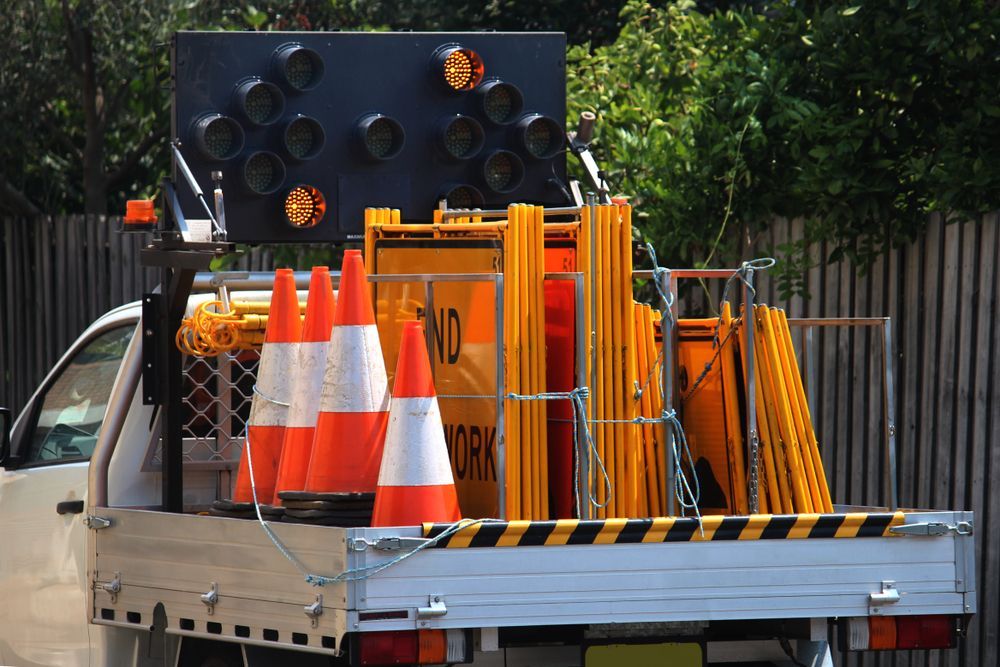
An arrow board is a high-visibility illuminated device used to give drivers a strong directional indication. It is most useful where approaching traffic needs to recognise quickly that the normal lane arrangement has changed and that vehicles should move in the direction shown by the approved display.
Common applications can include lane closures, lane shifts, taper arrangements, road maintenance and other works where a clear visual direction needs to be reinforced. The device is particularly effective because the illuminated arrow pattern can be recognised quickly from a distance, including in visually busy road environments.
An arrow board does not explain the full traffic arrangement. It does not replace the advance warning signs, speed signs, lane-closure signs, cones, bollards or other devices required by the Traffic Guidance Scheme. Its role is more focused: it reinforces the direction drivers need to move.
Smooth Flow supplies trailer-mounted arrow boards for urban and regional traffic-management projects across South Australia.
When is an arrow board most useful?
An arrow board may be useful where the traffic arrangement depends on a clear and immediate directional movement. A lane closure on a multi-lane road is a common example. Conventional signs can warn drivers that a lane is closing, while the arrow board reinforces the direction of the merge as vehicles reach the taper.
Road speed, traffic volume, sight distance, lane configuration and the type of work all affect whether an arrow board is appropriate. Current South Australian traffic-management examples include flashing arrow boards in a range of worksite layouts, but the required device still needs to come from the applicable TGS and current standards.
Arrow boards can also support moving or staged works where the active work area changes along a road corridor. Because Smooth Flow's units are trailer-mounted, they can be mobilised between work areas where the approved traffic arrangement requires them.
The important distinction is that an arrow board communicates direction. If the main problem is that drivers need written information about a closure, changed access or future works, a VMS board may be more appropriate.
What does a VMS board do?
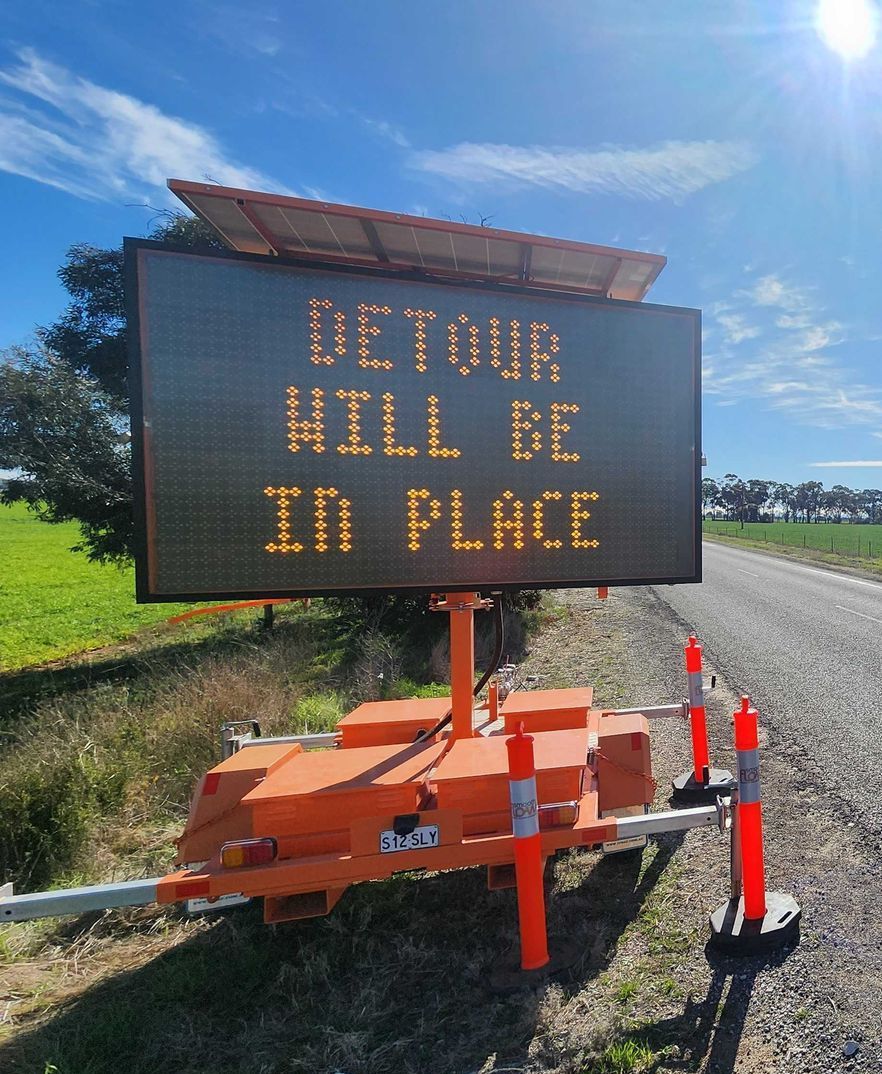
A Variable Message Sign, or VMS board, is designed to communicate changeable written information to approaching road users. It can provide advance notice of roadworks, closures, detours, changed conditions, delays, event access or other approved temporary information before drivers reach the affected area.
The ability to change the display makes VMS boards useful when conditions or project stages vary over time. A board may provide advance notice before works begin, then display a different approved message once a closure or detour is active.
Current South Australian standards state that portable VMS boards should supplement existing roadside infrastructure and should not replace conventional signs or pavement markings. That makes their role fundamentally different from standard traffic signs. A VMS adds flexible advance communication to the traffic-management system rather than becoming the whole system.
For a deeper explanation of messaging, placement and suitable applications, see our guide on what a VMS board is and when it should be used, or explore Smooth Flow's VMS board hire options.
When is a VMS board most useful?
VMS boards are particularly valuable when drivers benefit from receiving information before they reach the immediate work zone. That may include warning motorists that a road will close ahead, directing traffic toward a detour, communicating expected delays or advising of changed access during a major project or event.
DIT's current Roadworks Portal guidance notes that VMS boards are commonly relevant to larger works with significant traffic impacts or works that continue for longer periods. They may also be specified in other circumstances by the Traffic Management Centre or relevant road authority.
Placement is important. A message board that is positioned after the last practical detour opportunity may provide accurate information but little useful decision-making time. The traffic-management design should consider where motorists can safely read the message and respond.
VMS messaging is also controlled. The fact that a board is programmable does not mean any message can be displayed. Roadworks messages must follow the applicable South Australian requirements and approval process.
What role do conventional traffic signs play?
Conventional temporary traffic signs form the core warning, regulatory and directional system around most roadworks. They communicate standardised instructions that drivers are already trained to recognise, including roadwork warnings, temporary speed limits, lane conditions, changed traffic arrangements and other approved directions.
Smooth Flow's traffic sign range includes temporary speed signs, roadwork signs, changed-conditions signs, worksite signs and pedestrian safety signs for South Australian projects.
Unlike a VMS, a conventional sign has a fixed message. That can be an advantage because the meaning is consistent, recognisable and directly tied to the traffic arrangement. The signs are positioned at prescribed or designed locations so road users receive the required information in sequence as they approach and travel through the work zone.
Conventional signs should not be treated as the less sophisticated option. In the current SA framework they remain essential, and DIT specifically states that VMS boards are supplementary rather than replacements for conventional signs and pavement markings.
Arrow board vs VMS board: What is the difference?
The simplest way to separate the two is to consider the type of information being communicated.
- Arrow board: communicates a strong visual direction, such as moving traffic left or right around a lane closure.
- VMS board: communicates changeable written information, such as an upcoming closure, detour, delay or changed access arrangement.
An arrow board is therefore more closely associated with the immediate physical movement of traffic around a work zone, while a VMS often operates further upstream to prepare drivers for what is coming.
They can also work together. A VMS might provide advance notice that one lane will close ahead, conventional signs can establish the required warning sequence and temporary restrictions, and an arrow board can reinforce the merge direction at the lane-closure taper.
The devices complement each other because they solve different communication problems.
VMS board vs traffic signs: Which should you use?
In most compliant roadwork arrangements, this is not an either-or decision. Conventional traffic signs provide the standard warning and regulatory information required by the TGS, while a VMS may add flexible advance information when the traffic impact justifies it.
A VMS may be particularly useful when the project needs to communicate information that changes over time or when motorists need to make a route decision well before the immediate work zone. Conventional signs remain necessary closer to the works to communicate the detailed traffic-control arrangement.
For example, a VMS may tell motorists that a road is closed ahead and that an alternate route should be used. Conventional detour signs can then guide the driver through the approved alternative route. The electronic message gives advance notice, while the standard signs provide the structured route guidance.
The combination should be planned as one traffic-management system so the messages are consistent rather than repetitive or contradictory.
Arrow board vs traffic signs: Which should you use?
An arrow board gives drivers a strong illuminated directional cue, while traffic signs explain the wider arrangement. On a lane closure, standard signs may warn that roadworks are ahead, identify the affected lane and establish the applicable temporary speed environment. The arrow board then reinforces the direction of the lane shift or merge.
This means an arrow board is usually an additional directional device, not a replacement for the temporary signage specified by the TGS. Using only an arrow board could leave drivers without the advance warning or regulatory information they need before they reach the taper.
The same principle applies to cones and bollards. The arrow shows the intended movement, while the rest of the traffic-control setup physically and visually defines where vehicles should travel.
Project teams should therefore ask what information is missing from the proposed traffic arrangement rather than simply asking which single device is best.
When might all three be used together?
A larger roadworks project can reasonably use VMS boards, conventional signs and arrow boards in the same traffic arrangement because each device can perform a different function.
Consider a planned lane closure on a busy road. A VMS may be positioned in advance to advise motorists of changed conditions or upcoming delays. Conventional roadwork and temporary speed signs can establish the formal warning sequence as motorists approach. At the taper, an arrow board can reinforce the direction drivers need to merge.
The same layered approach can apply to major civil works, resurfacing, utility projects, emergency repairs and other works with meaningful traffic impacts. The exact combination will depend on the approved traffic plan, road classification, speed environment, traffic demand, available sight distance and project staging.
For an overview of how these devices fit into the broader worksite setup, see our guide to traffic control equipment for roadworks and construction sites.
What should determine the equipment combination?
Before arranging equipment, the traffic-management team should consider the complete road environment. Important factors can include:
- the road authority responsible for the site
- road classification and speed environment
- traffic volumes and peak periods
- lane configuration and available road width
- the location and length of lane closures
- available sight distance
- nearby intersections and side roads
- pedestrian and cyclist movements
- heavy vehicle traffic
- work duration and construction staging
- night works or reduced visibility
- detour opportunities
- the approved TMP and TGS
These factors determine what motorists need to know, when they need to know it and which traffic control device is best suited to communicate that information.
A practical selection guide
As a starting point, project teams can think about the devices in the following way:
- Use conventional traffic signs for the standard warning, regulatory and directional information required by the traffic setup.
- Consider an arrow board when drivers need a strong visual direction through a lane closure, taper or changed lane arrangement.
- Consider a VMS board when road users need changeable or advance written information before reaching the immediate traffic-control area.
- Use multiple devices together where each has a distinct purpose within the approved TGS.
This is only a planning guide. The actual equipment requirement should come from the site-specific traffic-management design and current authority requirements.
Frequently asked questions about arrow boards, VMS boards and traffic signs
Can a VMS board replace normal roadwork signs?
No. Current South Australian standards state that portable VMS boards should supplement existing roadside infrastructure and should not replace conventional traffic signs or pavement markings.
Can an arrow board replace lane-closure signs?
An arrow board should be used as part of the approved traffic arrangement rather than as a substitute for the temporary warning and regulatory signs specified by the TGS. Its primary role is to reinforce the required direction of traffic movement.
What is the main difference between an arrow board and a VMS board?
An arrow board communicates direction visually. A VMS board communicates changeable written information. They may be used together where both functions are needed.
Do all roadworks need a VMS board?
No. The need depends on the traffic impact, road environment, project duration, road-authority requirements and approved traffic arrangement. VMS boards are more commonly associated with works where motorists benefit from advance or changing information.
Are traffic signs still required if electronic boards are used?
Yes, where they are specified by the approved TGS. Electronic devices supplement the standard traffic-control system rather than removing the need for conventional signs.
Choose equipment around the traffic plan
Arrow boards, VMS boards and conventional traffic signs each solve a different traffic-management problem. Arrow boards provide an immediate directional cue, VMS boards communicate flexible advance information, and traffic signs establish the standard warnings and instructions drivers need to move through or around the worksite.
The safest and most effective approach is to select the equipment after the traffic arrangement has been designed. That keeps every sign and device focused on a defined purpose and reduces the risk of conflicting or unnecessary information.
Smooth Flow Traffic Management supplies trailer-mounted arrow boards, VMS boards, temporary traffic signs and wider traffic management equipment for projects across Adelaide and regional South Australia.
Contact our team with your project location, road conditions and traffic requirements to discuss the equipment and traffic-control support needed for your site.
External guidance: DIT South Australian traffic management documents, DIT Workzone traffic management and DIT Roadworks FAQs.