How to plan event traffic management in South Australia
Good event traffic management starts well before gates open. Concerts, festivals, community events, sporting fixtures and parades can create short, intense periods of vehicle and pedestrian movement that affect surrounding roads, parking areas, public transport, access points and nearby properties. If these movements are not planned early, organisers can end up dealing with congestion, unsafe crossings, blocked access, late road-closure changes or traffic controls that do not match the event layout.
In South Australia, the planning process also needs to account for the road authority responsible for the affected roads, the approvals required for closures or reduced speeds, and the temporary traffic management standards that apply. The most effective approach is to treat traffic as part of the event plan from the beginning rather than as a final operational task.
This guide explains the main areas to consider when planning event traffic management, from approvals and traffic plans to parking, pedestrian movements, temporary road controls, event-day monitoring and post-event departure.
Start with the event footprint and expected traffic impact
The first step is understanding how the event will change normal movement around the site. A small event contained within private land may have limited impact on surrounding roads, while a major concert, festival, sporting event or street-based event can affect multiple intersections, parking areas, bus routes, pedestrian crossings and access points.
Before deciding on traffic controls, map the full event footprint and identify where people and vehicles are likely to arrive, queue, cross, park, stop, turn and leave. This should include the event venue, nearby streets, car parks, drop-off areas, public transport stops, taxi and rideshare zones, loading areas, emergency access routes and any roads that may need to be closed or restricted.
Useful early questions include:
- How many attendees, staff, contractors and event vehicles are expected?
- What time will arrivals peak?
- Will most people arrive by car, public transport, bus, taxi, rideshare, bicycle or on foot?
- Which roads and intersections are likely to experience additional pressure?
- Will event infrastructure occupy road space, parking lanes, shoulders or footpaths?
- Will there be temporary road closures, lane closures, speed reductions or detours?
- How will people leave the event after the program finishes?
Smooth Flow provides event traffic management services for concerts, festivals and other large-scale events across Adelaide and South Australia, including planning and on-site traffic control.
Identify the road authority and approval process early
Event traffic arrangements cannot be planned properly until the organiser knows who controls the roads that may be affected. Depending on the location, this may be the South Australian Department for Infrastructure and Transport, a local council or another road or land authority.
For events affecting major arterial roads controlled by DIT, the Roadworks Portal may form part of the approval process. DIT advises that applications affecting road space must include a Traffic Management Plan or Traffic Guidance Scheme where required. For special or community events, DIT also requires the relevant SAPOL approval notice to be attached to the application.
DIT specifically states that if a road will be closed or speeds reduced for certain community events, a SAPOL approval notice is required under Section 33 of the Road Traffic Act 1961. Local council roads can have their own event approval and documentation processes, so organisers should confirm requirements with the responsible authority rather than assuming one process applies everywhere.
Starting this step early is important because the approval process can affect the event layout, road closure times, detour routes, signage, staffing and the final Traffic Guidance Scheme.
Determine whether a TMP, TGS or both are required
An event may need a broader Traffic Management Plan, one or more Traffic Guidance Schemes, or both. The required documentation depends on the scale of the event, the roads affected, the type of traffic controls proposed and the requirements of the approving authority.
A Traffic Management Plan describes the broader strategy for managing traffic risks and movements. It can cover arrivals and departures, road closures, parking, pedestrians, public transport, event vehicles, emergency access, traffic controllers, communication and contingency arrangements.
A Traffic Guidance Scheme is more site specific. It shows how temporary traffic control devices are arranged at a particular location or stage, such as signs, cones, barriers, traffic controller positions, temporary signals, lane tapers and road closures.
Large events can need several TGS drawings for different locations or phases. There may be one arrangement for event bump-in, another for the public event period, and another for bump-out or reopening roads. Smooth Flow’s traffic planning services can support TMPs, TGSs, detours, crossings, intersections and other project-specific traffic arrangements.
Plan road closures, lane restrictions and detours around the event program
If the event affects a live road, the timing of restrictions should match the actual event program. Closing roads too early can create unnecessary disruption, while leaving closures too late can result in vehicles entering areas that are already filling with pedestrians, contractors or event infrastructure.
Road-closure planning should consider setup and pack-down as well as the public event hours. Temporary fencing, stages, barriers, marquees, food vendors, broadcast vehicles and other infrastructure may need to be installed before attendees arrive and removed after they leave.
Where traffic is diverted, the detour needs to be practical for the type of vehicles that normally use the road. The route should account for intersections, road width, heavy vehicles, buses, local property access and any other roadworks or events taking place at the same time.
For events on roads in South Australia, DIT’s current temporary traffic management framework uses the Austroads Guide to Temporary Traffic Management as the primary reference, supported by South Australian standards and requirements. Event organisers should make sure current documents are used rather than relying on older standard layouts.
Design pedestrian movement before finalising vehicle routes
Event traffic management is not only about cars. Large numbers of pedestrians can create the most significant traffic-management challenge, particularly before and after an event when people move in concentrated groups.
Safe Work Australia’s event traffic guidance emphasises separating pedestrians and vehicles where reasonably practicable. For organisers, this means planning how attendees will move between car parks, public transport stops, drop-off areas, entrances, exits, toilets, food areas and other event zones without unnecessarily crossing vehicle routes.
Pedestrian planning may require:
- temporary crossings
- barriers or fencing to guide movement
- controlled crossing points
- traffic controllers or event marshals
- temporary footpath diversions
- accessible pedestrian routes
- lighting for evening events
- separation from loading zones and event vehicles
The highest-risk periods are often before gates open and immediately after the event finishes, when large groups can move quickly into surrounding streets. These peaks should be designed into the traffic plan rather than managed reactively.
Plan parking, drop-off and pick-up areas
Parking demand can significantly affect surrounding streets even when the event itself is located away from the road. If designated parking fills early, drivers may circulate through nearby streets looking for alternatives, creating congestion and additional pedestrian crossings.
The event plan should identify where attendees, staff, contractors, buses, accessible vehicles, taxis and rideshare vehicles are expected to stop or park. These groups may require different access arrangements.
Drop-off and pick-up zones should be positioned so vehicles can enter, stop and leave without blocking through traffic or creating unsafe pedestrian movements. Where possible, organisers should avoid placing high-turnover pick-up areas directly beside the busiest pedestrian exit.
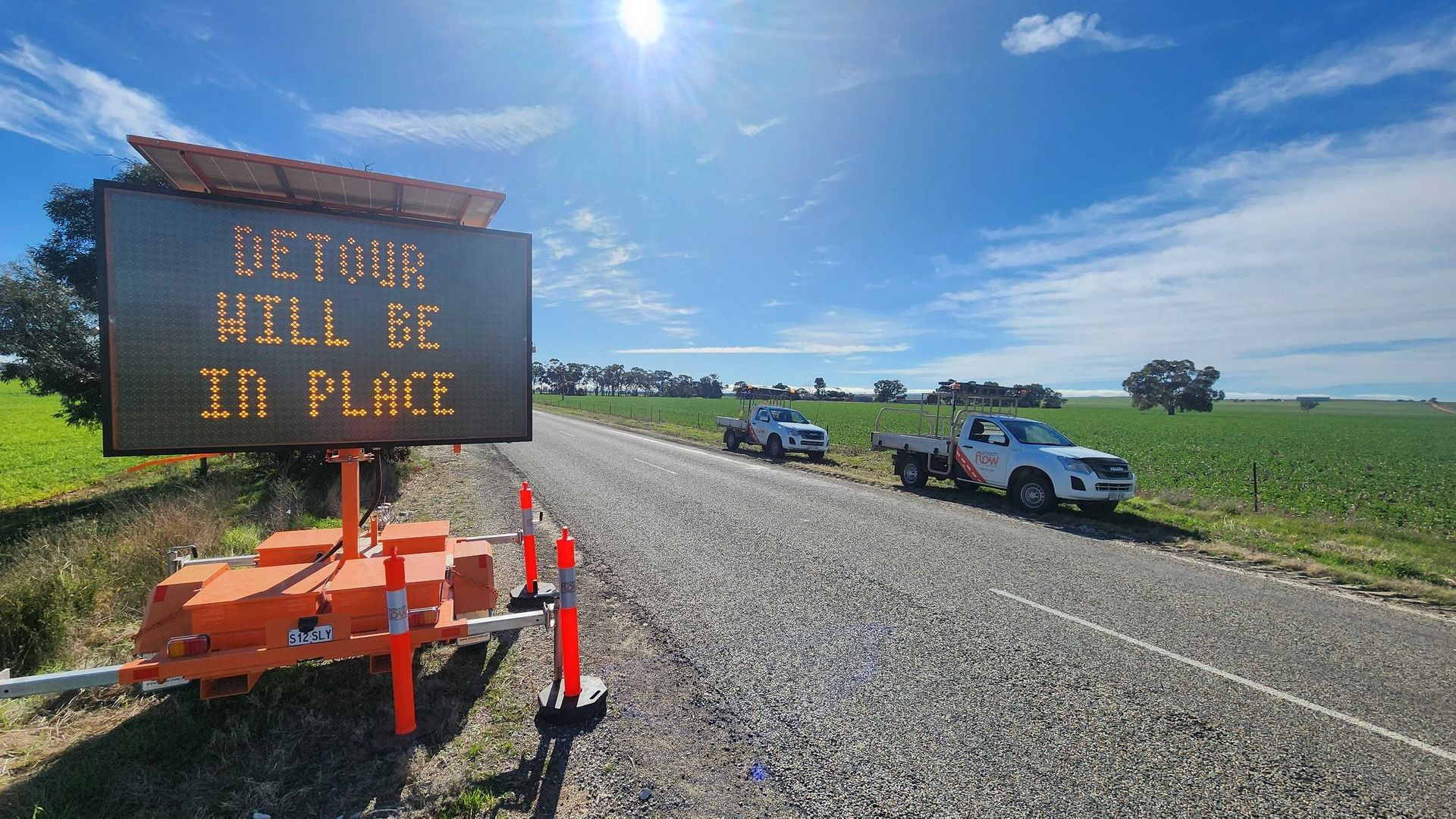
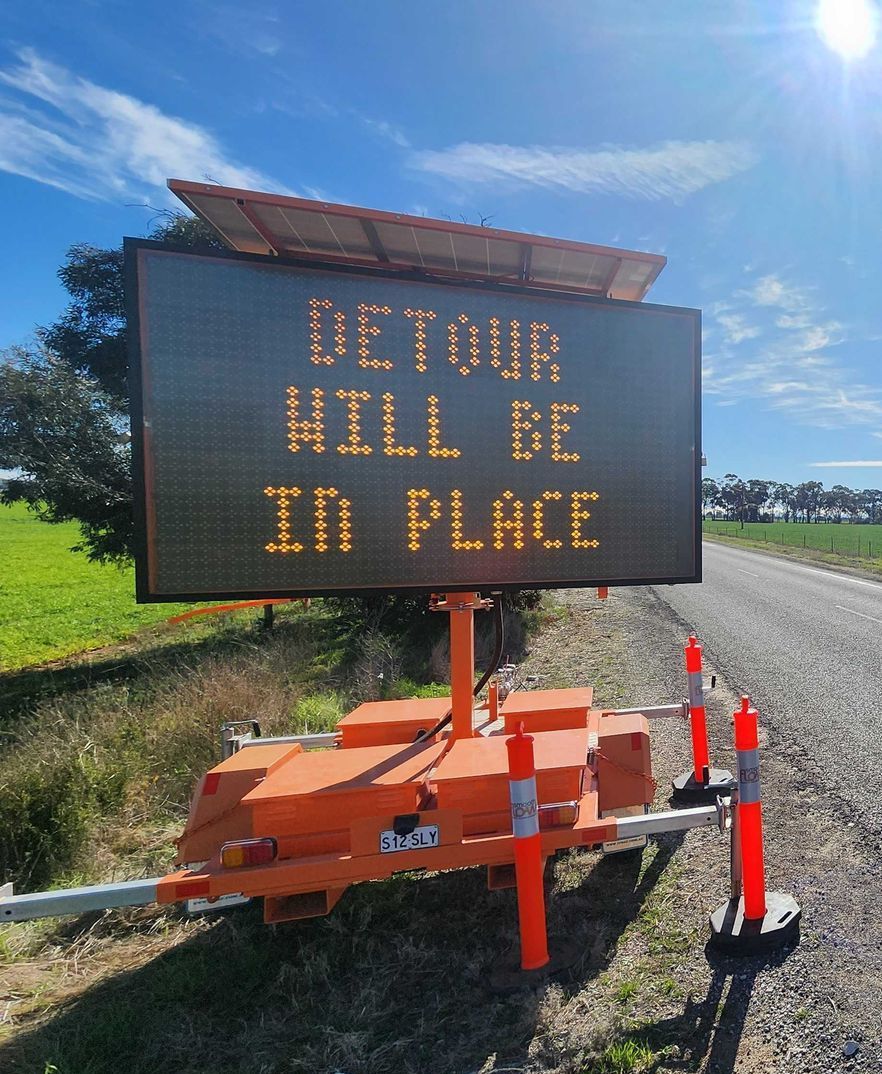
For major events, temporary signs or variable message signs may be useful to direct drivers toward parking, advise of road closures or communicate changes before they reach the event precinct. Smooth Flow’s traffic management equipment hire range includes VMS boards, temporary traffic lights, arrow boards, light towers and other temporary traffic control equipment.
Account for buses, public transport and event vehicles
Public transport can reduce private vehicle demand, but it introduces its own traffic-management requirements. Existing bus stops may be affected by road closures, event vehicles may need dedicated access, and shuttle buses may require layover or turning areas.
Event organisers should confirm whether public transport routes or stops will change and how passengers will move between temporary stops and the venue. If buses or coaches will be used specifically for the event, their arrival pattern, parking and departure should be planned separately from general traffic.
Event vehicles also need to be considered. Catering trucks, production vehicles, performers, suppliers, waste vehicles, security contractors and emergency services may all need access at different times. Their routes should be coordinated with pedestrian areas and public traffic restrictions.
Maintain emergency access throughout the event
Road closures, barriers, parked vehicles and crowds must not prevent emergency services from accessing the event or surrounding properties. Emergency access should be treated as a fixed requirement when the rest of the traffic layout is developed.
The plan should identify emergency access routes, points where barriers can be moved if required, key contacts and the process for changing traffic arrangements during an incident. Organisers should also consider how emergency vehicles could move through a large pedestrian crowd at peak times.
Where an event affects public roads, coordination with relevant authorities may form part of the approval process. The final traffic plan should make responsibilities clear so traffic controllers, event staff and supervisors know how to respond if access needs to be changed quickly.
Plan the traffic control crew and event-day setup
A traffic plan is only useful if it can be implemented consistently on the day. Organisers should confirm how many traffic controllers or marshals are required, where they will be positioned, when shifts begin and end, how they will communicate and who is authorised to make operational changes.
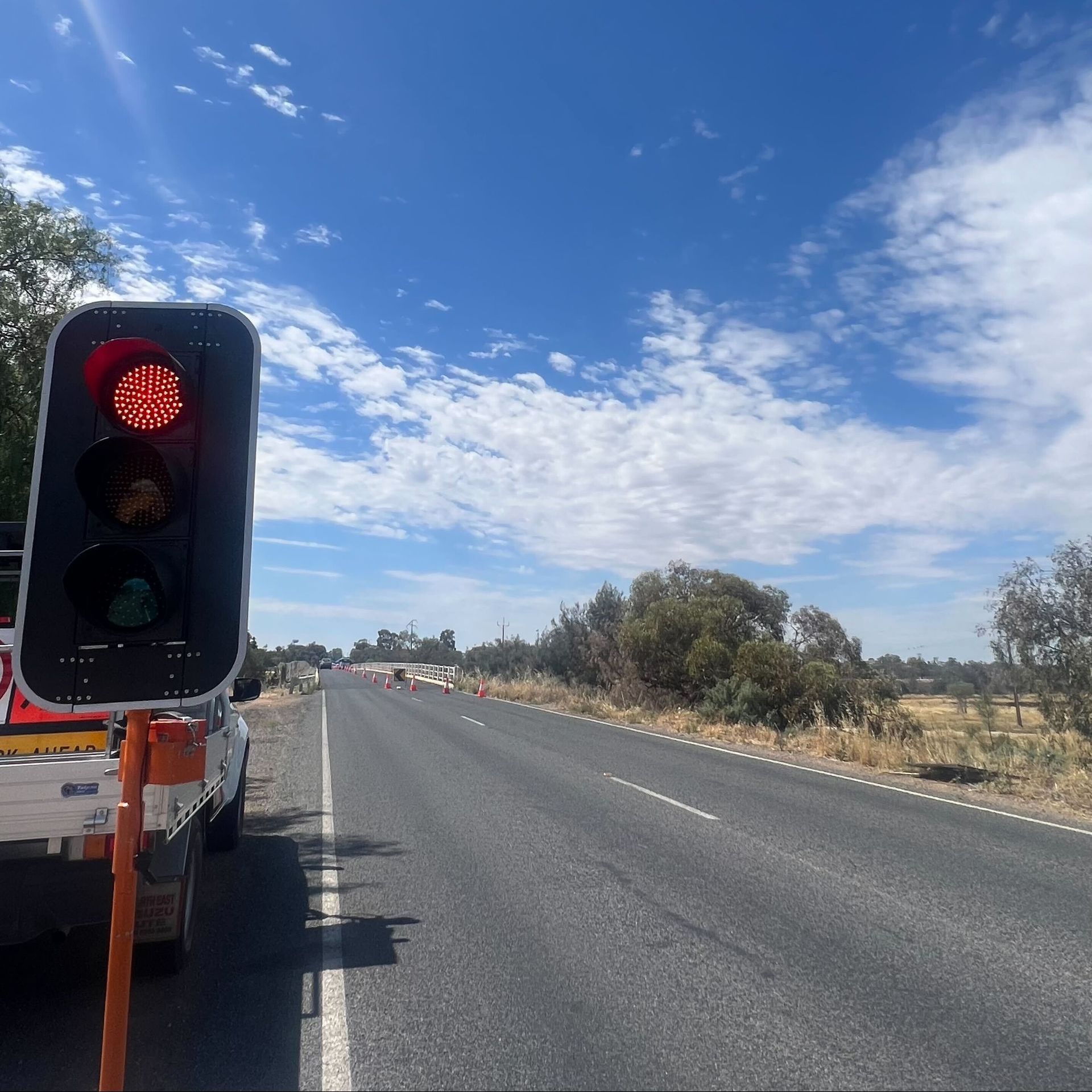
Smooth Flow’s traffic control services can support road and lane closures, stop and slow operations, detours, mobile traffic control and other event-specific arrangements.
Setup time should also be allowed for signs, barriers, cones, temporary signals, VMS boards and lighting. The traffic crew may need to establish controls before event contractors or attendees arrive, then progressively remove or change them as roads reopen.
For multi-day events, the arrangement should also address what happens overnight. Equipment may need to remain in place, be secured, be inspected before the next event day or be changed to suit lower overnight activity.
Prepare for changing conditions and event-day contingencies
Even a well-planned event can develop differently from the forecast. Attendance may be higher than expected, a car park may fill early, weather may change, a public transport service may be disrupted or an incident may close a road that was part of the planned access route.
The traffic plan should therefore identify likely contingencies and the people responsible for responding. Examples include:
- overflow parking arrangements
- alternative drop-off zones
- backup detour routes
- additional pedestrian controls
- changes to VMS messaging
- temporary holding areas for vehicles
- procedures for severe weather
- emergency road closures
Real-time communication is particularly important. Traffic controllers, event control, parking teams, security, public transport contacts and supervisors should have a clear way to share information when conditions change.
Do not overlook the departure period
Traffic demand after an event can be more concentrated than arrivals. Attendees may arrive over several hours but leave within a much shorter window, placing sudden pressure on exits, pedestrian crossings, car parks, surrounding intersections and rideshare areas.
The departure plan should consider how roads will be released, where pedestrians will be directed, whether traffic controllers remain in place after the event finishes, and how buses, taxis, rideshare vehicles and private cars will be managed at the same time.
Roads should only reopen when the event footprint and pedestrian activity make it appropriate to do so. If temporary infrastructure still occupies the road, separate arrangements may be required for bump-out crews after the public traffic plan has finished.
Event traffic management checklist
Before event-day mobilisation, organisers should be able to confirm:
- which roads, intersections, footpaths and parking areas will be affected
- who controls each affected road
- which council, DIT and SAPOL approvals are required
- whether a TMP, TGS or multiple TGS drawings are needed
- the timing of road closures, lane restrictions and speed changes
- arrival and departure traffic peaks
- pedestrian crossing and crowd movement arrangements
- parking, accessible parking and overflow parking
- taxi, rideshare and drop-off zones
- public transport and shuttle-bus arrangements
- event vehicle and supplier access
- emergency service access
- traffic controllers and event marshal positions
- temporary signs, barriers, VMS boards, lighting and signals
- communication and contingency procedures
- the process for reopening roads and removing controls
Frequently asked questions about event traffic management
Does every event need a traffic management plan?
No. The level of documentation depends on the event, location, road impact and approval requirements. Events that affect public roads, change normal traffic conditions or create significant pedestrian and vehicle interaction are more likely to require formal traffic planning.
Do I need SAPOL approval to close a road for an event?
For certain community events in South Australia, DIT states that closing a road or reducing speeds requires a SAPOL approval notice under Section 33 of the Road Traffic Act 1961. The relevant road authority should also be consulted because council or DIT approval requirements may apply.
What is the difference between an event TMP and TGS?
A TMP sets out the broader strategy for managing traffic around the event, while a TGS shows the site-specific arrangement of temporary traffic control devices for a particular location or stage.
When should event traffic planning begin?
Planning should begin early enough to identify road authority requirements, prepare traffic documentation, obtain approvals and coordinate closures, crews and equipment before event mobilisation. Larger events and events affecting major roads generally require more lead time.
Can the traffic plan change on the day?
Operational adjustments may be necessary if conditions change, but changes should remain within the approved traffic-management framework and be made by appropriately authorised personnel. Major changes affecting road closures, speed restrictions or approved layouts may require further authority involvement.
Plan event traffic before the crowd arrives
Effective event traffic management connects the event schedule with the surrounding road network, pedestrian flows, parking, public transport, temporary controls and approval requirements. The earlier these elements are coordinated, the easier it is to identify conflicts and avoid last-minute changes.
Smooth Flow Traffic Management provides event traffic planning, traffic control and equipment support for events across Adelaide and South Australia. Explore our event traffic management services to see how we can support planning and event-day traffic operations.
If you have an event location, proposed dates or road-closure requirements ready, contact our team to discuss your event traffic management requirements.