Civil construction traffic management: What to plan before work starts
Good construction traffic management starts before crews, plant, and equipment arrive on site. Once civil works are underway, changing access points, redesigning vehicle routes, or adding traffic controls at short notice can create avoidable delays and coordination problems. Planning early gives the project team time to understand how construction will affect workers, road users, pedestrians, deliveries, and nearby properties.
For civil projects in South Australia, that preparation may include confirming the responsible road authority, understanding the temporary traffic management category of the road, planning construction vehicle movements, identifying pedestrian impacts, and determining which traffic plans, traffic guidance schemes, crews, signs, or temporary devices will be needed.
This guide focuses on the practical decisions that should be made before mobilisation. If you need a detailed breakdown of the document itself, see our guide to what a construction traffic management plan should include.
Why should construction traffic management be planned before mobilisation?
Civil works often involve more than one type of traffic movement at the same time. Workers may be arriving, trucks may be entering and leaving the site, plant may be operating close to access points, and members of the public may still need to move past the work area.
If these movements are not considered early, the project can end up reacting to problems after work starts. Common issues include trucks queueing on the road, access points with poor visibility, pedestrians being diverted into unsuitable areas, delivery vehicles arriving when there is nowhere to hold them, or work zones requiring more space than originally expected.
Safe Work Australia recommends separating pedestrians and vehicles where reasonably practicable, minimising unnecessary vehicle movement, and considering risks associated with reversing, loading, unloading, access, and visibility. These issues are easier to address when they are incorporated into the construction methodology rather than treated as a last-minute traffic-control task.
Smooth Flow provides civil traffic management services for construction and civil works across South Australia, including planning and on-site traffic control.
Confirm the road authority and approval requirements first
Before planning the physical traffic setup, identify who controls the affected road or public space. The requirements can differ depending on whether the road is managed by the South Australian Department for Infrastructure and Transport, a local council, or another asset owner.
DIT advises that work on major arterial roads requires approval through the Roadworks Portal before roadworks begin. Temporary traffic management must follow the Austroads Guide to Temporary Traffic Management together with relevant South Australian standards and guidelines.
Confirming the road authority early helps the project team understand which documents, permits, timeframes, and approvals need to be allowed for in the construction program. It can also prevent the wrong traffic documentation being prepared for the site.
Understand the road environment and traffic conditions
Construction traffic management should be based on the actual road environment. A low-speed local street and a high-volume arterial road can require very different traffic controls even if the construction activity itself is similar.
Important conditions to review before work starts can include:
- road classification and temporary traffic management category
- posted speed limit
- traffic volumes and peak periods
- number and width of lanes
- nearby intersections and turning movements
- sight distance and visibility
- bus routes and public transport stops
- pedestrian and cyclist activity
- adjacent driveways and property access
- schools, shops, community facilities, and other sensitive locations
DIT classifies roads for temporary traffic management according to their complexity and safety risk. Higher traffic volumes and speed environments generally require more detailed traffic management practices, so the road category should be understood before the worksite layout is finalised.
Plan site entry and exit before heavy vehicles arrive
Site access is one of the most important pre-start decisions on a civil project. An access point that looks convenient on a site plan may be difficult to use safely once the turning path of a truck, float, or articulated vehicle is considered.
Before mobilisation, review where construction vehicles will enter and leave, the direction they will approach from, the space required to turn, and whether they will need to cross traffic lanes, footpaths, or cycle routes. Large vehicles may also need additional room to slow, turn, or accelerate back into traffic.
Where possible, the access arrangement should avoid reversing onto public roads and minimise interaction between construction vehicles and pedestrians. If vehicles must enter or leave through a constrained location, traffic controllers or other temporary controls may be needed.
Map out truck, plant, and delivery movements
Civil construction can generate very different vehicle movements across the life of a project. Early earthworks may involve excavators, tippers, and spoil removal, while later stages can introduce concrete trucks, cranes, floats, utility vehicles, and material deliveries.
The project team should identify major vehicle types and expected movements before work begins. Useful questions include:
- Which vehicles will enter the site?
- How frequently will they arrive?
- Where will they wait if the site is not ready?
- Where will they load or unload?
- Will any vehicles need to reverse?
- Are oversize or heavy vehicle movements expected?
- Can movements be scheduled outside peak traffic periods?
- Will construction traffic use residential streets or other sensitive routes?
Planning these movements can reduce conflicts between trucks, workers, plant, and public traffic and can also help the construction team coordinate deliveries with available site space.
Separate pedestrians, cyclists, and construction traffic
Pedestrian and cyclist movements need to be considered before barriers, fencing, site sheds, and work zones are installed. Once the site footprint is established, it can be much harder to create a practical alternative route.
Where works affect footpaths, crossings, shared paths, or cycle lanes, determine how people will move past the site and whether a temporary route, barrier, crossing point, or controlled diversion is required. The route should also account for accessibility and avoid directing pedestrians into vehicle access points or active work areas.
This can be particularly important near schools, public transport stops, shopping areas, hospitals, community facilities, and busy urban sites where pedestrian activity remains high throughout the day.
Coordinate road and lane closures with the construction program
If the work will occupy a lane, shoulder, footpath, or part of the road reserve, identify when that occupation will occur and how long it will be required. The traffic arrangement should align with the actual construction sequence rather than remaining unchanged for convenience.
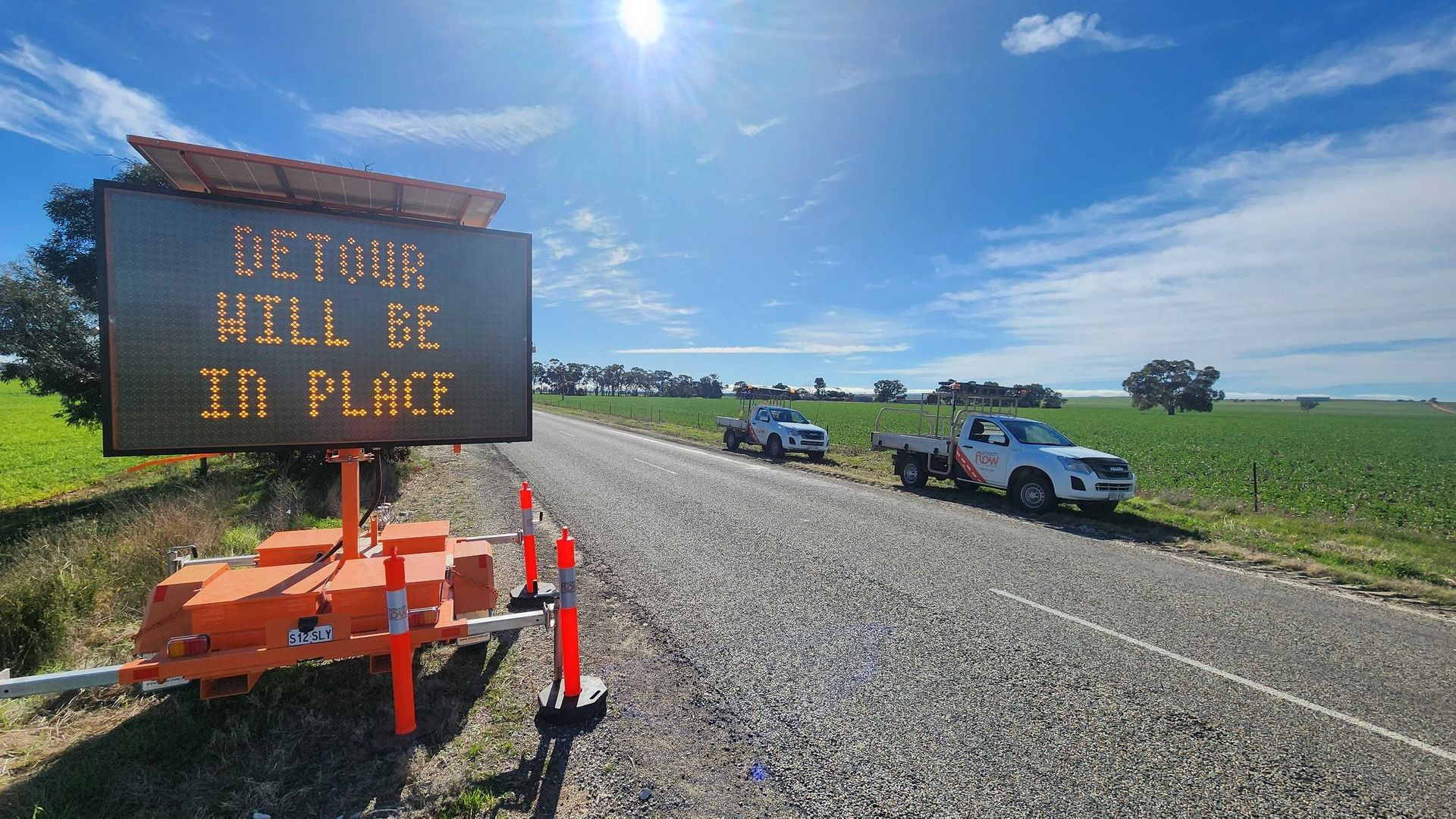
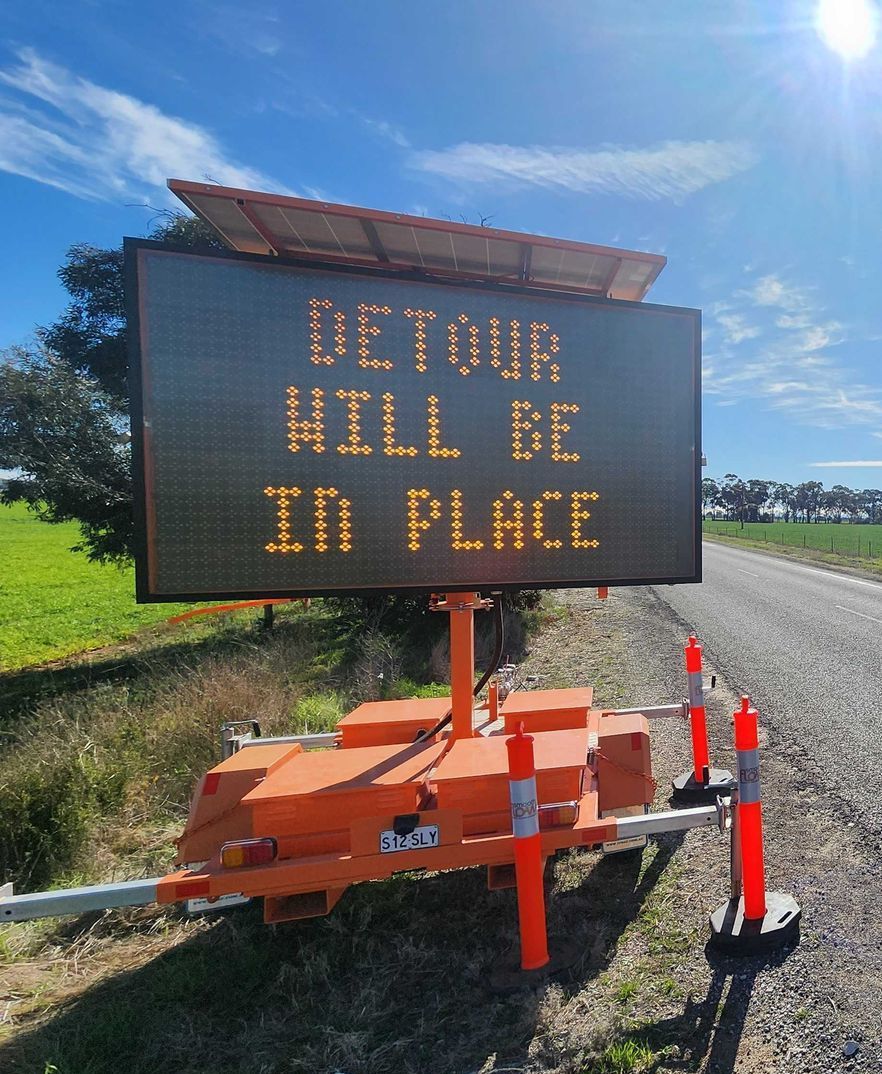
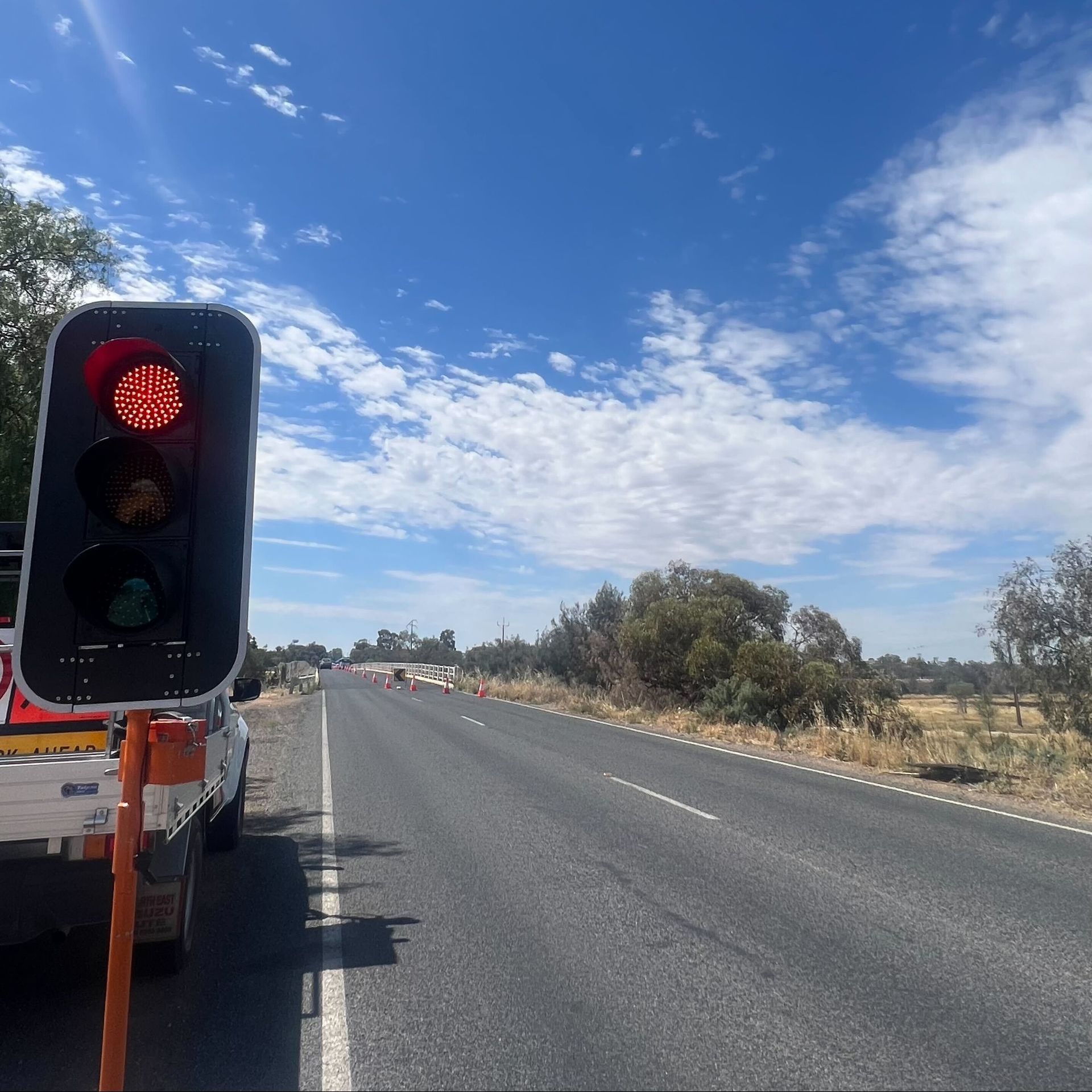
A project may require different arrangements for excavation, service installation, concrete pours, crane lifts, deliveries, resurfacing, or reinstatement. Some stages may only need a shoulder closure, while others could require a lane closure, stop and slow operation, temporary signals, or a detour.
Planning these stages early helps determine how many traffic guidance schemes may be required and when traffic control services need to be booked.
Identify the traffic control equipment the site will need
The required equipment should follow the approved traffic arrangement. Depending on the site, this may include temporary signs, cones, barriers, portable traffic lights, trailer-mounted traffic lights, arrow boards, VMS boards, or lighting towers.
Equipment requirements can change between project stages, particularly where work moves along a road corridor or changes from daytime to night works. Understanding these requirements in advance makes it easier to coordinate delivery, setup, and availability.
Smooth Flow also provides traffic management equipment hire for urban, regional, and remote projects across South Australia.
Allow for traffic guidance schemes and project-specific plans
Pre-start planning should identify what traffic documentation is likely to be required. A broader traffic management plan can address the overall traffic strategy, while traffic guidance schemes show the site-specific layout of temporary traffic control devices for individual work areas or stages.
Projects with multiple construction stages may require more than one TGS. For example, a civil project could use one arrangement for an initial lane closure, another for a service crossing, and another for a later detour.
South Australia's current framework uses the Austroads Guide to Temporary Traffic Management as the primary national reference, supported by the South Australian Standards for Workzone Traffic Management and the state's supplement to AS 1742.3. DIT also updated its temporary traffic management documents in 2026, so project teams should use the current versions rather than relying on old standard layouts.
For project-specific documentation, explore Smooth Flow's traffic planning services.
Plan for changing conditions, not just day one
Civil construction sites change quickly. Excavations move, access points shift, barriers are installed, traffic lanes are reinstated, and different subcontractors introduce new vehicle movements. A traffic arrangement that is appropriate during site establishment may not suit later works.
Before mobilisation, identify the points in the program where the traffic setup is likely to change. This makes it easier to plan reviews, revised TGS drawings, additional traffic controllers, or different equipment before those stages arrive.
DIT's July 2026 temporary traffic management update also highlights clearer requirements around traffic management plans, worksite types, and checking and reviewing traffic management practices. This reinforces the need to treat traffic management as an active part of the project rather than a one-off pre-start document.
What information should be ready before engaging a traffic management provider?
A clearer project brief generally leads to a more useful traffic management solution. Before requesting planning or mobilisation, gather as much of the following information as possible:
- worksite address and affected road names
- site and construction drawings
- construction methodology
- proposed work dates and hours
- major construction stages
- site access and exit locations
- expected truck, plant, and delivery movements
- known lane, shoulder, road, or footpath occupations
- pedestrian and cyclist impacts
- nearby intersections, schools, businesses, or public transport
- known council or DIT requirements
- any existing permits or approval conditions
Providing this information early can reduce redesign and help identify the plans, personnel, and equipment required before the construction team mobilises.
Frequently asked questions about civil construction traffic management
When should traffic management planning start on a civil project?
Ideally, it should begin while the construction methodology, site access, and staging are still being developed. This allows traffic requirements to influence the project setup before crews and equipment are committed.
Does every civil project need traffic controllers?
No. The controls required depend on the road environment, project risks, work activities, and approved traffic arrangement. Some sites may require traffic controllers, while others may rely on different temporary traffic management measures.
Can the same traffic setup be used for the whole construction project?
Sometimes, but many projects require different arrangements as the work progresses. Changes to access, lane occupation, pedestrian routes, work areas, or construction activities may require the traffic setup to be reviewed or revised.
What is the difference between construction traffic management and a construction traffic management plan?
Construction traffic management is the broader process of planning, implementing, monitoring, and adjusting how traffic is managed around a project. A construction traffic management plan is one of the documents used to describe that strategy. For more detail, read our guide to what a construction traffic management plan should include.
Coordinate traffic management before civil works begin
Effective construction traffic management depends on understanding the work before the site becomes active. Road authority requirements, vehicle movements, pedestrian access, lane occupations, construction staging, traffic plans, crews, and equipment all need to fit together with the construction methodology.
Smooth Flow Traffic Management supports civil and construction projects across Adelaide, regional South Australia, and remote areas with traffic planning, on-site traffic control, and traffic management equipment.
If you are preparing for upcoming civil works, contact our team to discuss your traffic management requirements before mobilisation.