Mine site and remote traffic management: What needs to be considered?
Traffic management for a mine site or remote project involves more than taking a metropolitan roadwork setup and moving it further from town. Long travel distances, high-speed roads, heavy and oversize vehicles, changing site access, limited nearby resources, and difficult environmental conditions can all affect how the work needs to be planned.
Mining and remote projects can also involve two different traffic environments at once. One part of the job may take place within a controlled mine or project site, while another affects a public highway, local road, access track, or intersection. The traffic controls need to match the actual environment at each point rather than relying on a single generic arrangement.
This guide explains the main considerations for mine site and remote traffic management in South Australia, including vehicle movements, public-road requirements, equipment, mobilisation, weather, visibility, emergency access, and the need to review arrangements as the project changes.
What makes mine site and remote traffic management different?
Remote projects often combine distance, higher travel speeds, heavy vehicle movements, and fewer nearby support services. A traffic management issue that can be corrected quickly on an urban project may be much harder to resolve when the worksite is several hours from the nearest depot, supplier, or replacement crew.
Mine sites can introduce another layer of complexity through the interaction of heavy mobile plant, light vehicles, work crews, delivery vehicles, contractors, and site visitors. Safe Work Australia identifies vehicle and pedestrian interaction, loading and unloading, visibility, entry and exit points, and powered mobile plant as important traffic-management risks that need to be assessed and controlled.
The starting point should therefore be the actual movement of people, vehicles, and plant across the project rather than the assumption that every remote or mining job requires the same controls.
Smooth Flow provides mine site traffic management and remote area traffic management for projects across South Australia.
Map the traffic environment before mobilisation
Before crews or equipment are mobilised, the project team should identify the roads, access points, work areas, haul routes, intersections, parking areas, loading zones, and other locations where traffic will move or interact.
Important questions include:
- Which roads will project vehicles use to reach the site?
- Where will heavy and light vehicles enter and exit?
- Will vehicles need to cross or turn across live traffic?
- Where will trucks or oversize loads wait before entering the work area?
- Are haul roads, access roads, or intersections shared by different vehicle types?
- Where will pedestrians or work crews interact with vehicles?
- Will the project affect a public road, shoulder, intersection, or roadside area?
- Are night works, temporary closures, or controlled movements expected?
Answering these questions early helps determine whether the job needs a broader traffic management plan, one or more traffic guidance schemes, traffic controllers, vehicle pilotage, temporary signals, signage, or other traffic-management resources.
Separate internal mine traffic from public-road requirements
A mine or remote project may have traffic controls that apply within the project boundary as well as temporary traffic management requirements for public roads outside the site. These should be treated as related but distinct environments.
Within a mine or controlled worksite, the operator's traffic rules, site procedures, vehicle requirements, haul routes, access controls, and project-specific risk controls may apply. Where work affects a public road, the relevant road authority and South Australian temporary traffic management requirements also need to be considered.
For major arterial roads controlled by South Australia's Department for Infrastructure and Transport, approval is required through the Roadworks Portal before roadworks begin. DIT states that temporary traffic management should follow the Austroads Guide to Temporary Traffic Management together with relevant South Australian standards and guidelines.
DIT also classifies roads for temporary traffic management according to their complexity and safety risk, with higher traffic volumes and speed environments generally requiring higher levels of traffic-management practice. This makes the road environment especially important when a remote project interfaces with a high-speed regional route.
For project-specific documentation, Smooth Flow provides traffic management plans and traffic guidance schemes for urban, regional, and remote works.
Plan for high-speed rural and regional roads
Remote roads can appear simple because they carry less traffic than metropolitan roads, but lower traffic volume does not automatically mean lower risk. Regional roads may have high operating speeds, long stopping distances, limited lighting, narrow shoulders, restricted sight distance, or long distances between intersections and alternative routes.
Drivers can also encounter a worksite after travelling for long periods without seeing other roadworks. Advance warning, visibility, temporary speed arrangements, work-zone positioning, and the location of traffic controllers or devices need to suit the road and the approach conditions.
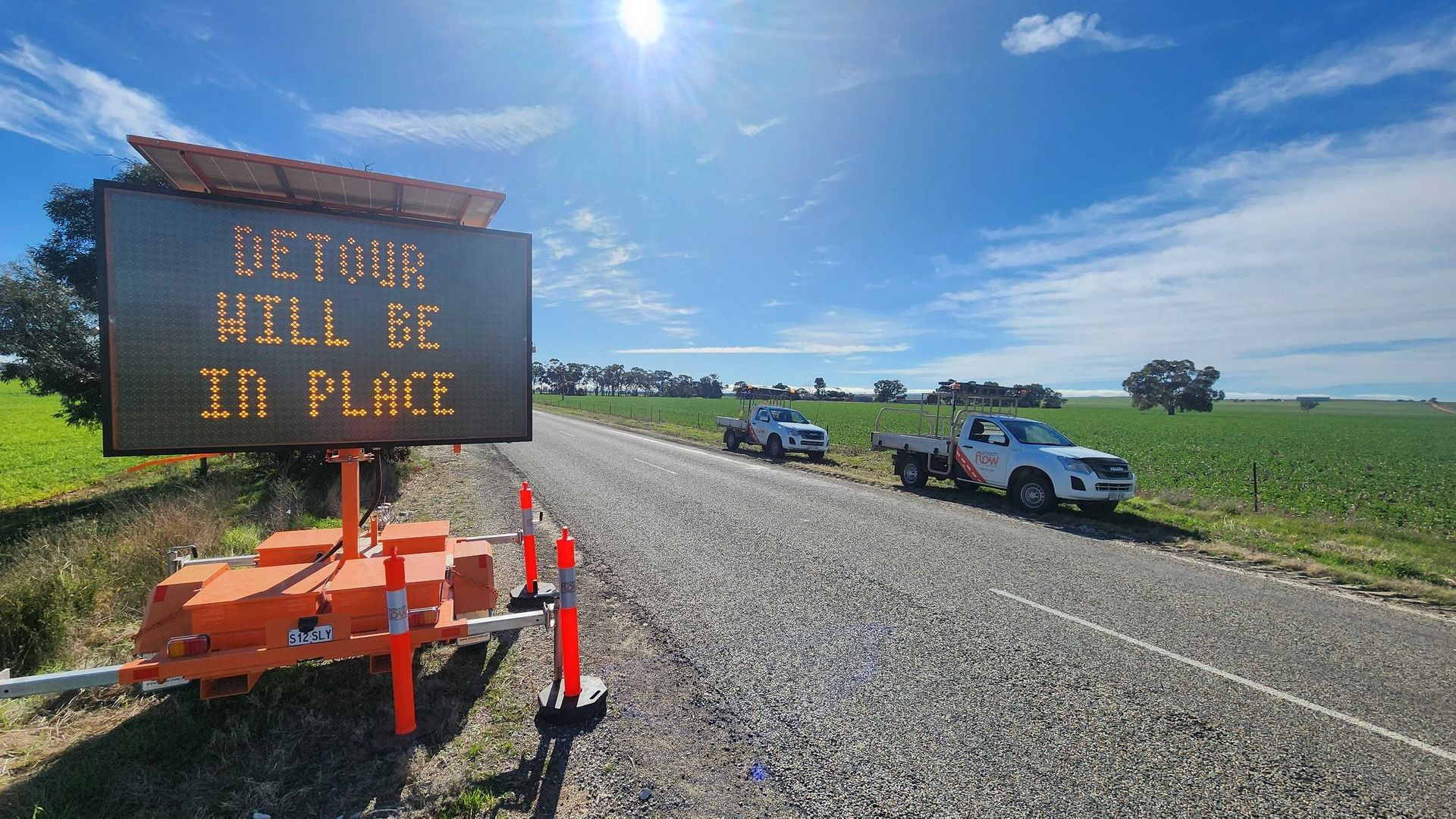
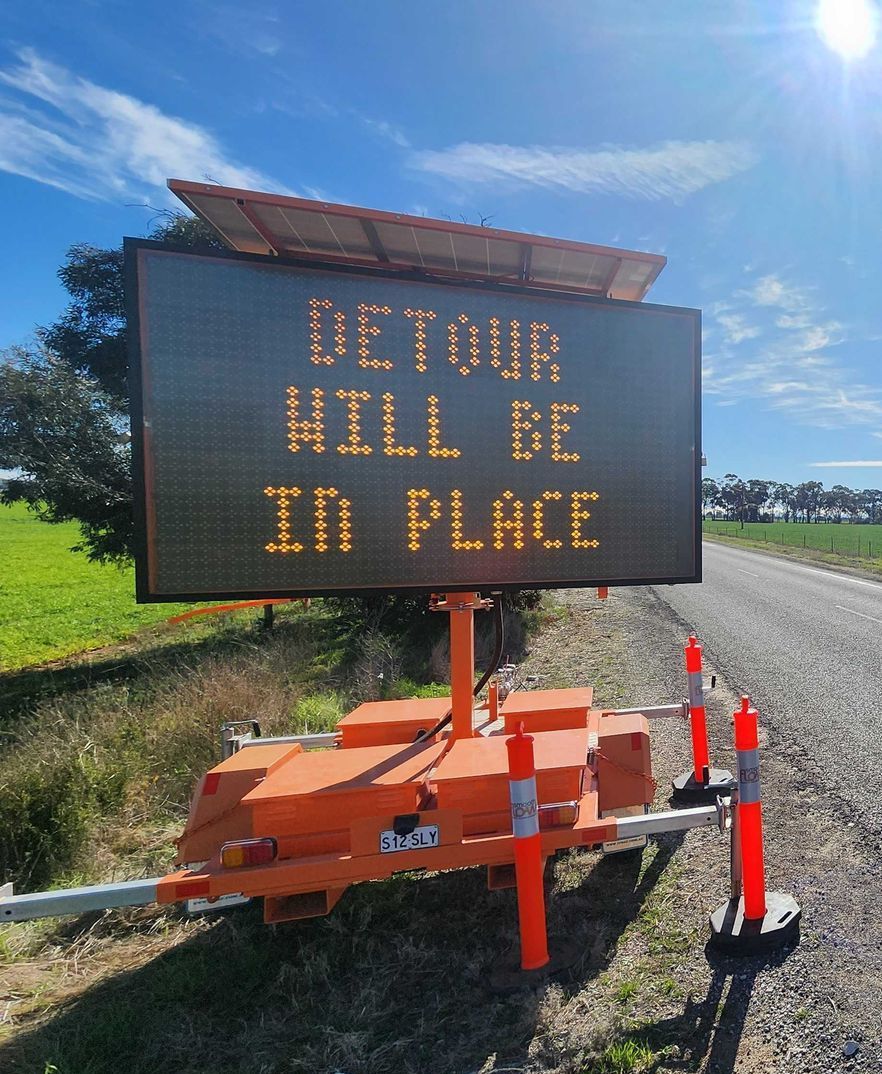
The traffic-management setup should consider road geometry, crests, curves, roadside vegetation, dust, glare, and the distance available for road users to identify and respond to the temporary arrangement. These factors can influence the placement of signs, variable message boards, portable signals, and work vehicles.
Where roadworks are required beyond metropolitan areas, Smooth Flow's remote road traffic services support regional highways, local roads, road closures, detours, night works, and other remote traffic requirements.
Consider heavy vehicles, mobile plant, and oversize movements
Mining, resources, civil, and remote construction projects can involve vehicle types that behave very differently from ordinary passenger vehicles. Haul trucks, floats, cranes, delivery trucks, mobile plant, oversize loads, and articulated vehicles may need more space to turn, longer distances to stop, and more time to enter or leave a worksite.
The traffic-management approach should consider where these vehicles will travel, where they can safely wait, how they will enter the site, whether they need to cross live lanes, and how they will interact with light vehicles and workers.
Vehicle pilotage or controlled traffic movements may also be appropriate for certain project activities. Smooth Flow's traffic control service includes on-site vehicle pilotage as well as road and lane closures, stop and slow operations, detours, and mobile traffic control.
A practical example is Smooth Flow's work on a temporary mining camp in Roxby Downs. The project involved the mobilisation of more than 500 oversize crib rooms. Smooth Flow's team escorted the units into the camp using pilot vehicles and implemented contraflow arrangements while road works were underway. The project demonstrates why traffic planning for mining work needs to account for the actual size, frequency, and route of project vehicle movements rather than treating them as ordinary deliveries.
You can view more examples of Smooth Flow's regional and mining work on the past projects page.
Plan equipment before crews travel to site
Distance changes the consequences of missing or unsuitable equipment. On a remote project, discovering that an additional sign, board, temporary signal, or lighting unit is needed after the crew arrives can create significant delays if replacement equipment has to travel from another region.
The required equipment should follow the approved traffic arrangement and may include:
- temporary regulatory and warning signs
- cones, bollards, and barriers
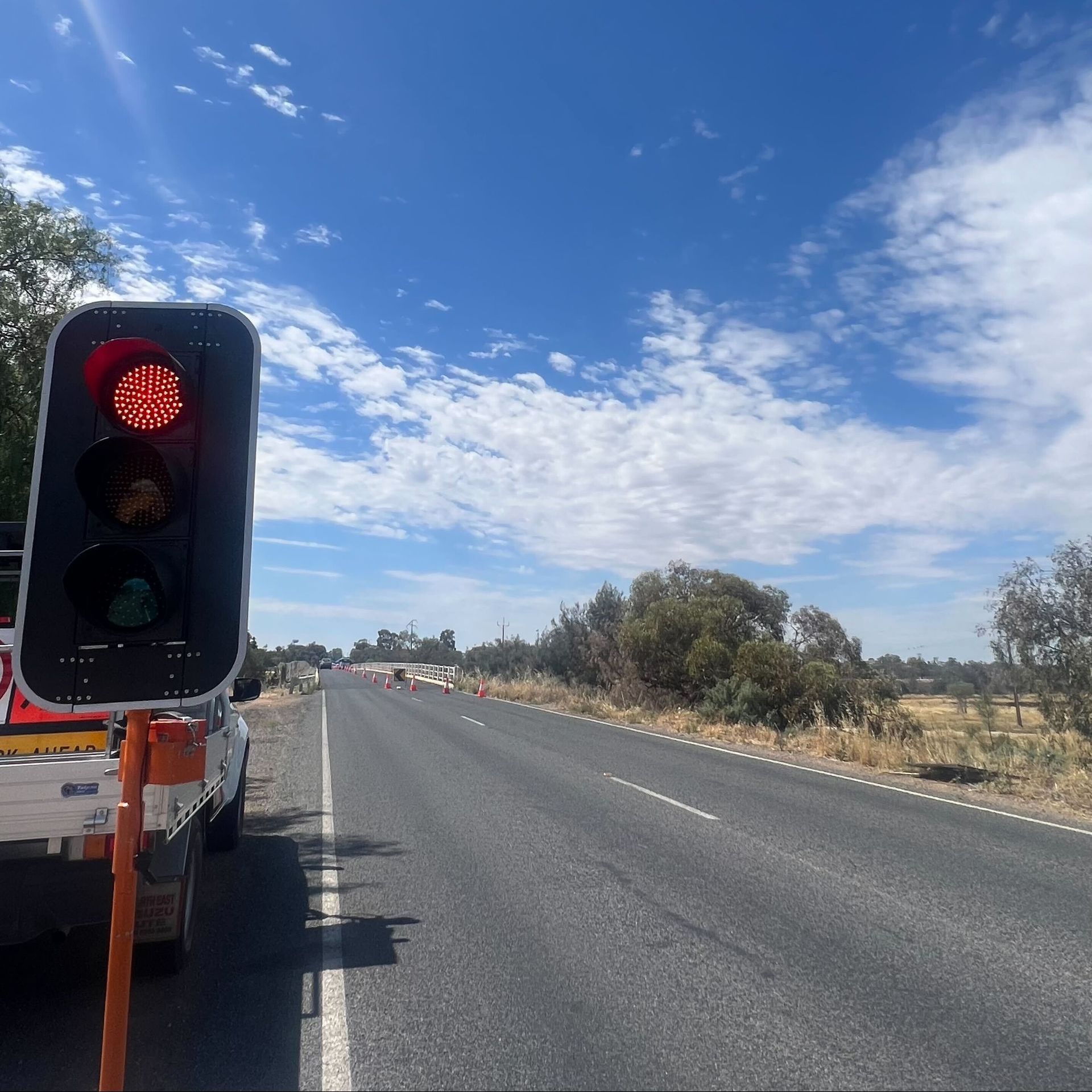
- portable traffic lights
- trailer-mounted traffic lights
- variable message signs
- arrow boards
- light towers for night or low-light work
- pilot or traffic-control vehicles
- site-specific or custom traffic signs
Remote project planning should also consider how equipment will be transported, positioned, powered, checked, maintained, and replaced if conditions change. The objective is not to over-supply the worksite, but to make sure the resources required by the approved traffic setup can be implemented reliably.
Smooth Flow's traffic management equipment hire range includes temporary traffic lights, VMS boards, arrow boards, lighting towers, and custom traffic signage for projects across South Australia.
Allow for communications, crew logistics, and site access
Traffic management depends on coordination between traffic controllers, supervisors, drivers, plant operators, site management, and other contractors. Remote projects can make this more difficult where crews are spread over long distances or where phone coverage and access to support services are limited.
Before mobilisation, the project team should confirm how traffic personnel will communicate, where handovers occur, who can approve changes to the traffic arrangement, and how drivers will receive site-specific instructions. Mine and project inductions, access requirements, accommodation, travel, shift planning, and crew changeovers can also affect how the traffic-management work is delivered.
These logistical considerations should be resolved alongside the traffic plan rather than after the crew has reached site. A workable traffic arrangement needs enough people and resources to establish, operate, inspect, adjust, and remove the controls safely throughout the required work period.
Account for dust, weather, visibility, and night works
Remote South Australian works can be exposed to dust, heat, strong winds, storms, heavy rain, flooding, glare, and rapidly changing visibility. These conditions can affect both the road user and the traffic-management equipment being used.
Dust can reduce the visibility of signs, workers, vehicles, and intersections. Rain can change road surfaces and access conditions. Strong winds can affect temporary devices, while darkness can make an otherwise straightforward layout much harder for approaching drivers to understand.
If night works are planned, lighting should support the work without creating unnecessary glare or confusing road users. Traffic controllers, signs, temporary signals, and work vehicles should remain visible in the conditions expected at the site.
The plan should also identify the circumstances that would trigger a review or change to the setup. A traffic arrangement that is suitable in clear daylight may not remain appropriate during dust, severe weather, reduced visibility, or flooding.
Maintain emergency and essential access
Remote projects need to consider how emergency vehicles and essential site traffic will move through or around the work area. Road closures, queues, temporary barriers, parked vehicles, and construction plant should not create an avoidable access problem if an incident occurs.
The project team should identify emergency access routes, escalation contacts, traffic-control responsibilities, and the process for changing or removing controls if access needs to be restored. Where the work affects a public road, coordination requirements may also involve the relevant road authority or emergency services.
For remote projects, response time is another practical consideration. The further the worksite is from external support, the more important it becomes to have clear site procedures and traffic arrangements that can be managed by the resources already available at the location.
Review traffic management as the mine or project changes
Mine sites and remote construction projects rarely remain static. Access roads move, work fronts change, haul routes are altered, new compounds open, temporary facilities are removed, and different contractors bring new vehicle movements to the site.
Traffic management should be reviewed when these changes affect the way people, vehicles, and plant interact. Safe Work Australia recommends reviewing traffic risks and controls, including near misses and issues identified by workers, drivers, and pedestrians. The traffic arrangement should continue to match the real conditions on site rather than being treated as a fixed document prepared only for mobilisation.
A review may lead to revised traffic guidance schemes, different signs or equipment, additional traffic controllers, changes to vehicle routes, or new arrangements for pedestrians and light vehicles.
Remote and mine traffic management checklist
Before mobilisation, project teams should be able to answer the following:
- Which public and private roads will be affected?
- Who controls each road or traffic environment?
- What heavy, light, oversize, and mobile plant movements are expected?
- Where will vehicles enter, exit, turn, wait, load, and unload?
- How will pedestrians and work crews be separated from vehicles?
- Which project stages will change the traffic arrangement?
- Are road closures, contraflow, temporary signals, detours, or pilot vehicles required?
- What traffic plans or TGSs need to be prepared?
- What traffic-control equipment needs to reach the site?
- How will crews communicate and manage handovers?
- How will night work, dust, weather, and poor visibility be managed?
- How will emergency and essential access be maintained?
- What conditions will trigger a review of the traffic setup?
Working through these questions early can reduce last-minute changes and make it easier to coordinate traffic management with the wider mining, civil, or construction program.
Frequently asked questions about mining and remote traffic management
Does every remote project need traffic controllers?
No. The required controls depend on the project, road environment, risks, and approved traffic arrangement. Some works may need traffic controllers, while others may use temporary signs, signals, barriers, detours, or other measures. The traffic setup should be based on the actual work rather than distance alone.
Do mine sites use the same traffic rules as public roads?
Not necessarily. A mine operator can have site-specific traffic procedures and vehicle requirements that apply within the controlled mine environment. Where project activities affect a public road, the relevant road authority requirements and South Australian temporary traffic management standards also need to be followed.
What traffic equipment is commonly used on remote projects?
The equipment depends on the approved arrangement. Temporary signs, VMS boards, arrow boards, portable traffic lights, trailer-mounted traffic lights, barriers, cones, lighting towers, and traffic-control vehicles are among the devices that may be used for regional or remote work.
How early should remote traffic management be planned?
Planning should begin early enough to confirm road approvals, site access, vehicle movements, documentation, personnel, equipment, and mobilisation requirements before work starts. Remote travel distances make late changes harder to absorb, so traffic requirements should be integrated into the wider project program as early as practical.
Can the same provider plan and implement the traffic management?
Yes, where the provider has the required capability for the project. Coordinating planning, traffic controllers, equipment, and mobilisation through the same provider can make it easier to align the approved traffic arrangement with the resources that will implement it on site.
Plan remote traffic management around the real project conditions
Effective mine and remote traffic management depends on understanding the actual road environment, vehicle movements, work stages, site rules, public-road requirements, distance, and environmental conditions before crews mobilise.
Smooth Flow Traffic Management supports mining, civil, infrastructure, and remote projects across South Australia with traffic planning, traffic control, vehicle pilotage, and traffic-management equipment. Contact our team to discuss your mining or remote traffic requirements and the resources needed for your project.