Emergency traffic management: How road closures and incidents are managed
Emergency traffic management is different from planned roadworks because the traffic problem already exists when the response begins. A crash, flood, fallen tree, breakdown, damaged road surface or other hazard can change normal road conditions without warning, leaving responders to protect the scene while traffic is still approaching.
The first objective is not to recreate a fully planned worksite instantly. It is to establish enough control to protect road users and responders, keep emergency access open and prevent the incident from creating additional hazards. Once the immediate risk is stabilised, the traffic arrangement can be developed into a more structured closure, detour or controlled traffic operation.
In South Australia, emergency traffic management can involve the incident control agency, South Australia Police, the Department for Infrastructure and Transport, local government, emergency services and specialist traffic management crews. This guide explains how those arrangements typically develop from the first response through to reopening the road.
What is emergency traffic management?
Emergency traffic management is the temporary control of vehicles and pedestrians around an unexpected incident or hazard. It can involve restricting access, closing lanes or roads, diverting traffic, protecting emergency responders, managing queues and keeping essential access available while the incident is resolved.
South Australia's Traffic Management during Emergencies guidance recognises that emergency conditions can change throughout an incident and that traffic arrangements need to be based on continual risk assessment. A closure that is appropriate at the beginning of an emergency may need to expand, contract or move as the hazard changes.
Common situations requiring emergency traffic control can include:
- motor vehicle crashes
- flooded or water-covered roads
- fallen trees or debris
- vehicle breakdowns in hazardous locations
- damaged road surfaces
- utility failures affecting the road reserve
- fires or hazardous incidents near roads
- storm damage
- unexpected road closures
- urgent repair works following an incident
Smooth Flow provides emergency traffic response services across Adelaide and regional South Australia for incidents including accidents, flooding, breakdowns and road closures.
The first priority is protecting the incident area
When an incident occurs on or beside a live road, approaching drivers may have very little warning that conditions have changed. The initial traffic response therefore focuses on creating separation between normal traffic and the hazard.
Depending on the road and incident, immediate controls may include warning vehicles, temporary signs, cones, barriers, traffic controllers, lane restrictions or a full road closure. The exact arrangement should match the risk rather than assuming every emergency needs the same setup.
High-speed roads require particular care because approaching vehicles need more distance to identify the hazard, reduce speed and respond safely. Curves, crests, poor weather, darkness, dust or heavy traffic can further reduce the time available to drivers.
The traffic control point should be positioned far enough from the incident to avoid directing road users into the hazard itself. In some cases, this means the safest closure point or diversion begins well before the visible incident scene.
Emergency access must remain available
Traffic management must protect the public without obstructing the emergency response. Police, ambulance, fire crews, recovery vehicles, utility crews and other responders may need repeated access to the incident area while normal traffic is restricted.
The South Australian emergency-management framework places strong emphasis on responder and community safety and recognises the need to coordinate traffic arrangements with the agencies managing the incident. That can include maintaining a dedicated emergency route, creating controlled access through a closure point or keeping specific lanes clear.
Traffic controllers and supervisors need to understand which vehicles are permitted through the closure, where they should enter and how access will change if the incident area expands. A road that appears completely closed to the public may still require controlled movement for emergency and essential vehicles.
Clear communication is important because access requirements can change quickly. A recovery vehicle, road-maintenance crew or specialist response team may need to reach the scene after the initial emergency services have already arrived.
Who controls road closures during an emergency in South Australia?
Responsibility depends on the type of emergency, the road and the agencies involved. South Australia's Traffic Management during Emergencies guidance states that the control agency is responsible for traffic management as part of its incident-management arrangements, while South Australia Police has independent authority to close roads and divert traffic during emergencies.
The Department for Infrastructure and Transport's Traffic Management Centre also has an important role in managing the road network and coordinating with local government. Where local roads are affected, councils may need to be involved, particularly when detours move traffic onto their road network.
This becomes especially important for heavy vehicles. A diversion that is suitable for passenger cars may not be suitable for trucks because of road width, bridge limits, turning space or pavement conditions. The emergency-management guidance therefore calls for consultation with relevant councils where practicable before heavy vehicles are diverted onto local roads.
For urgent roadworks on DIT-controlled roads, DIT directs jobs requiring action within two hours and completion within 24 hours to the Traffic Management Centre. These emergency or urgent declarations are separate from ordinary planned roadworks and are intended for genuinely time-critical work.
How an emergency road closure is established
A road closure usually develops in stages. The first arrangement may be a simple protective block created by emergency responders. As specialist traffic resources arrive, the closure can be moved to safer locations, supported with advance warning and connected to a suitable detour.
1. Confirm what needs to be isolated
The response team first needs to understand the extent of the hazard. A crash may affect one lane, while flooding or fire may require the entire road corridor to be closed. Hazards can also extend beyond what is immediately visible, particularly where debris, unstable trees, smoke, water or damaged infrastructure are involved.
2. Select safe closure points
Closure points should give approaching drivers enough time and space to stop or divert. Where possible, they should also give drivers a practical alternative route rather than forcing large numbers of vehicles to turn around in a constrained location.
Nearby intersections can sometimes provide more effective diversion points than a closure immediately beside the incident. The appropriate location depends on road speed, traffic volumes, geometry, visibility and the available detour network.
3. Add advance warning
Once the closure is stabilised, advance warning can be added so drivers receive information before reaching the queue or closure point. This may include temporary warning signs, variable message signs, arrow boards or other approved devices.
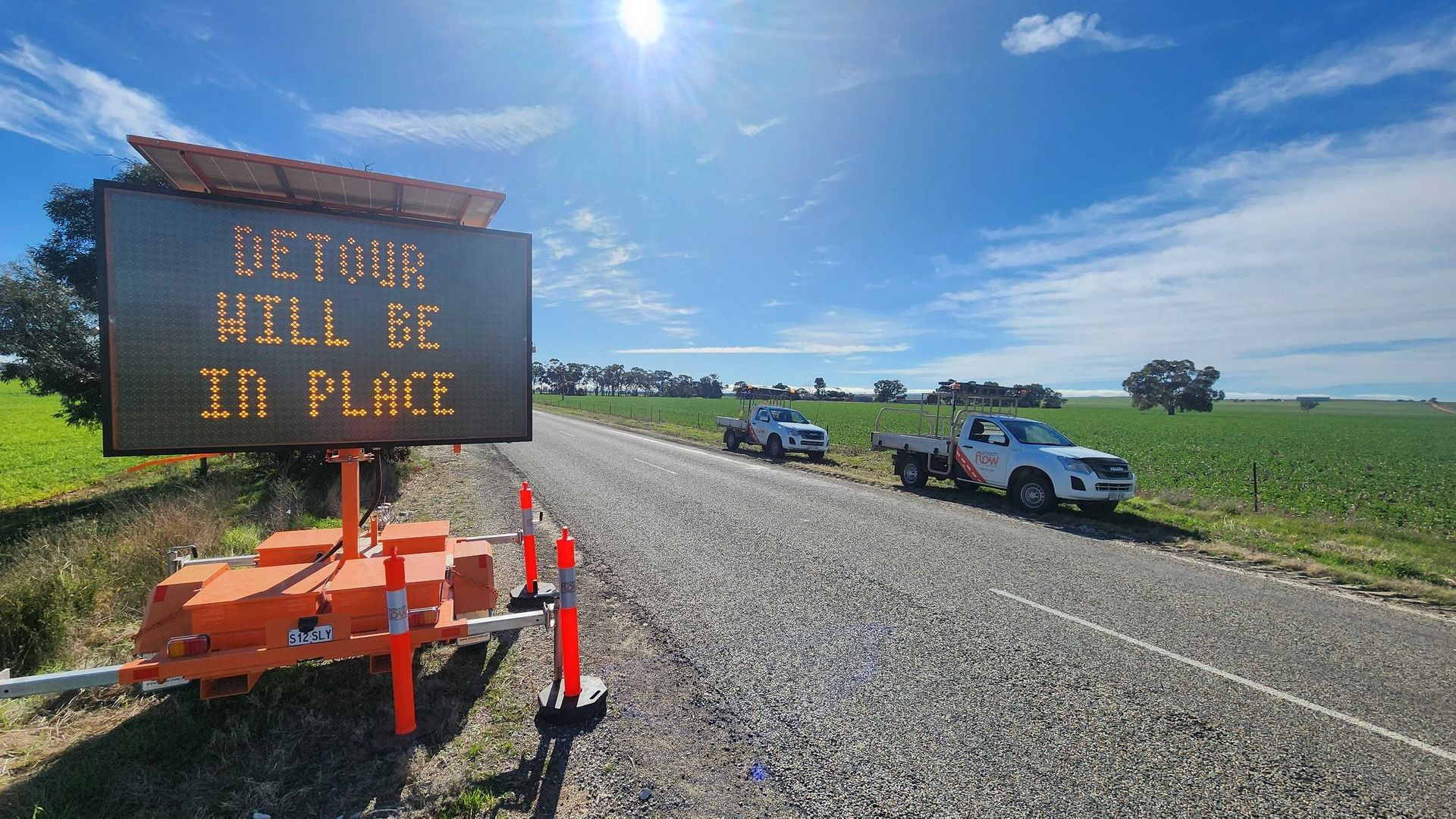
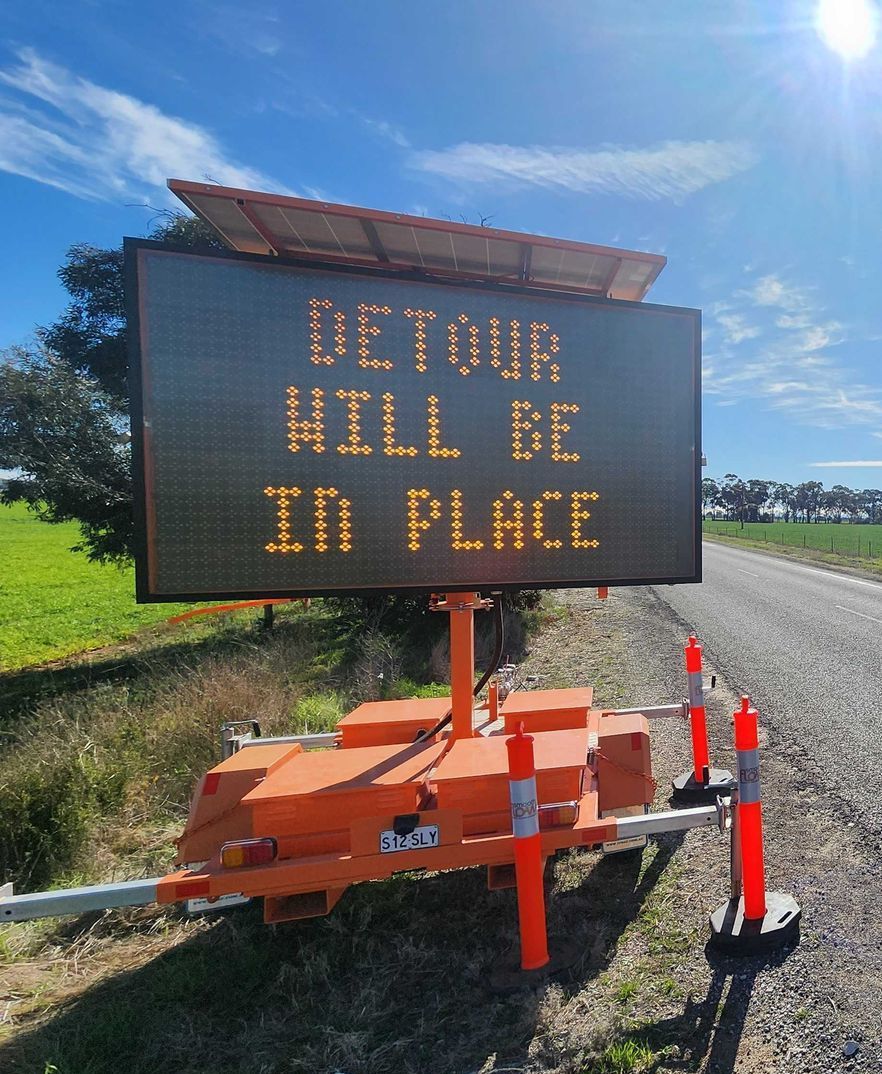
Smooth Flow's VMS boards can support temporary road messaging where advance notice of closures, changed conditions or detours is required.
4. Establish the diversion or controlled movement
If traffic cannot pass the incident, a detour may be needed. The alternative route should be suitable for the vehicles being diverted and should not simply transfer the hazard to another unsuitable road.
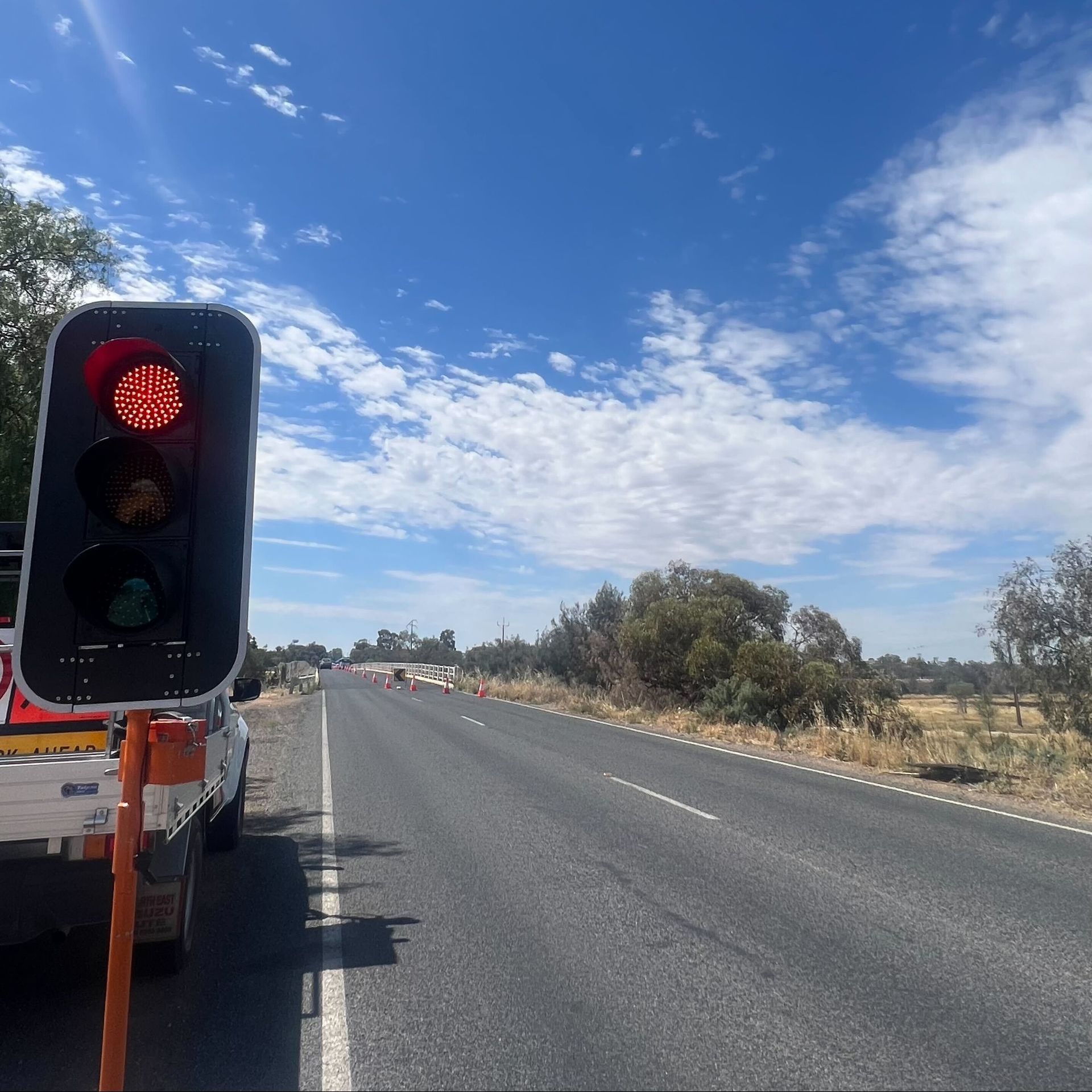
Where one part of the road remains usable, traffic may instead be managed through a controlled single-lane arrangement, stop and slow operation or other temporary traffic-control method. Smooth Flow's traffic control services support lane and road closures, detours, stop and slow operations and other temporary arrangements.
Detours need to work for the traffic being diverted
The shortest alternative route is not always the best detour. Emergency diversions need to consider road width, intersections, heavy vehicles, local access, schools, residential streets, low bridges, road condition and the amount of additional traffic the route can reasonably carry.
For regional emergencies, the alternative route may be much longer than the closed section. This can affect fuel requirements, freight movements, driver fatigue, access to towns and the ability of local roads to accommodate unexpected traffic volumes.
A diversion can also create new congestion at intersections that normally carry much lower traffic volumes. Traffic controllers, temporary signs or additional monitoring may therefore be required at locations away from the actual emergency.
Where conditions change, the detour may need to change as well. Floodwater can close additional roads, a fire perimeter can expand or another incident can affect the original diversion route.
Managing queues and approaching traffic
One of the risks during an emergency closure is the queue that develops behind it. Drivers approaching at normal road speed may not expect stationary traffic, particularly on highways and regional roads.
Queue management should therefore be treated as part of the incident, not simply as a consequence of it. Advance warning, speed management, VMS messaging, traffic controllers and suitable positioning of warning devices can help drivers identify the changed conditions earlier.
DIT's Roadworks Portal guidance for high-speed roads also highlights the need for dynamic management around stationary or slow-moving queues. Although emergency conditions can differ from planned works, the same underlying principle applies: warning needs to remain relevant to where the actual traffic queue is forming.
If the queue extends beyond the original traffic-control area, the setup should be reviewed. A closure that was suitable when ten vehicles were waiting may no longer be appropriate once traffic is backing through an intersection or over a crest.
Emergency traffic management during flooding and severe weather
Flooding, storms and severe weather can make emergency traffic control particularly difficult because the hazard can continue to change after the road is closed. Water levels can rise, additional trees can fall, visibility can reduce and alternate roads can become unavailable.
Traffic controllers should not be placed where the weather or road environment exposes them to unnecessary risk. Closure points may need to be located further from the hazard, and the traffic arrangement should allow for the affected area to expand.
Regional and outback roads can also be affected for longer periods. DIT publishes current road closures, restrictions and warnings through Traffic SA and its Outback Road Warnings service, giving road users access to updated information about changing conditions.
Smooth Flow's traffic response capability includes flooding-related emergencies, while its remote road traffic services support road closures, detours, night works and other traffic requirements outside metropolitan areas.
Night-time emergency traffic control needs additional visibility
An emergency that continues after dark can require additional controls because drivers have less time to understand an unfamiliar layout. Emergency vehicles, work lights and flashing beacons can also create glare or visual clutter around the incident scene.
Signs, barriers, traffic controllers and closure points need to remain visible without creating confusion about the route drivers should follow. Lighting should support the work area and traffic-control points while avoiding unnecessary glare toward approaching traffic.
For extended night operations, lighting tower hire can support visibility around traffic-control and work areas where additional illumination is required.
The arrangement should still be reviewed as conditions change. A layout established in daylight may need additional warning, lighting or repositioning once darkness reduces sight distance.
How emergency traffic management changes once the scene is stable
The first traffic controls installed during an emergency are often temporary by necessity. Once the incident is under control, there is an opportunity to replace the initial protective arrangement with a more considered setup.
This may involve moving closure points, changing the detour, adding signs, installing temporary signals, introducing a traffic guidance scheme or creating access arrangements for repair crews. If urgent repair work continues after the immediate emergency has passed, the site can begin to operate more like a temporary work zone.
South Australia's current temporary traffic management framework uses the Austroads Guide to Temporary Traffic Management as the primary reference, supported by South Australian standards and requirements. Where the incident transitions into road repair, utility work or another controlled work activity, those temporary traffic management requirements become increasingly relevant.
Smooth Flow also provides traffic management plans and traffic guidance schemes where a more structured arrangement is needed after the immediate response.
Traffic information needs to stay consistent
A road closure affects people well beyond the physical incident scene. Drivers may need to change routes kilometres before the closure, freight operators may need to redirect vehicles and local residents may need controlled access to properties.
South Australia's emergency-management guidance emphasises consistent public information as part of traffic management. The message given at the closure point should align with information distributed through road authorities, emergency services and public information channels.
DIT's Traffic SA service provides a real-time map of roadworks, incidents and events across metropolitan and country South Australia, including road closures and delays. For long-running incidents, keeping these public channels updated can reduce the number of drivers arriving at the closure unnecessarily.
On the road, VMS boards and temporary signs can reinforce the same message by advising drivers of the closure, detour or expected delay before they reach the affected area.
When can the road reopen?
A road should not reopen simply because the main emergency appears to be over. The traffic environment itself needs to be safe enough for normal or controlled movement to resume.
Before reopening, the responsible agencies may need to confirm that hazards have been removed, responders and recovery crews are clear of live traffic areas, debris has been cleared, road infrastructure is usable and any remaining restrictions can be managed safely.
Reopening may happen progressively. One lane may open under traffic control before the full road is restored, or some vehicle classes may be allowed through while others remain restricted.
Traffic-control devices should also be removed in a controlled sequence so drivers are not directed into a road that is still partially closed. Where a detour has been operating for an extended period, public messaging should be updated so road users know normal access has resumed.
Emergency traffic management checklist
During an unexpected road incident, the response team should be able to establish or confirm:
- the type and extent of the hazard
- which agency is controlling the incident
- which road authority is responsible for the affected road
- safe initial closure or control points
- access requirements for emergency and essential vehicles
- advance warning for approaching traffic
- queue length and queue-related risks
- whether a lane closure, full closure or controlled movement is appropriate
- a suitable detour for the vehicles being diverted
- heavy vehicle implications
- traffic controller and equipment requirements
- lighting and visibility requirements
- communications between agencies and traffic crews
- public information and road-status updates
- conditions that will trigger a change to the arrangement
- requirements for transitioning into urgent repair works
- the process for safely reopening the road
Frequently asked questions about emergency traffic management
What situations can require emergency traffic management?
Examples include crashes, flooding, fallen trees, breakdowns, damaged roads, utility failures, fires, storm damage and other unexpected hazards that affect normal vehicle or pedestrian movement.
Who can close a road during an emergency in South Australia?
The authority depends on the incident and road. South Australia's emergency-management guidance states that SAPOL has independent authority to close roads during emergencies, while the control agency, DIT Traffic Management Centre and relevant local councils can also have important traffic-management responsibilities.
Does an emergency road closure need a traffic management plan?
Immediate controls may need to be established before a formal plan can be prepared. As the incident stabilises, a more structured traffic arrangement, traffic guidance scheme or traffic management plan may be required, particularly if urgent repair work or an extended closure follows.
How are motorists told about an emergency road closure?
Information can be communicated through traffic controllers, temporary signs, VMS boards, police or emergency-service messaging and road-authority channels such as Traffic SA. The aim is to give consistent information and warn road users early enough to choose another route.
How long can an emergency traffic setup remain in place?
It depends on the incident. Traffic controls should remain only while they are required and appropriate for the actual conditions. Long-running incidents should be reviewed regularly, with the setup adjusted as the hazard, traffic demand and repair activities change.
Responding to unexpected road incidents across South Australia
Emergency traffic management is an active process. It begins with protecting the incident area, but effective control also requires safe responder access, suitable closure points, workable detours, queue management, consistent public information and ongoing adjustment as conditions change.
Smooth Flow Traffic Management provides round-the-clock traffic response for road-based emergencies across Adelaide and regional South Australia, supported by traffic controllers, traffic management equipment and wider planning capability.
Explore our traffic response services for accidents, flooding, breakdowns and emergency road closures. If you need immediate traffic support or want to discuss contingency arrangements for a project, contact our team.
External guidance: South Australian State Emergency Management Plan, DIT Roadworks Portal FAQs and Traffic SA.