Traffic management plan vs traffic guidance scheme in SA
Traffic management plan, traffic guidance scheme, traffic control plan. The terminology used around roadworks can be confusing, particularly when different authorities, contractors, and project documents use similar terms. In South Australia, understanding the difference matters because the document you need will depend on the project, the road environment, the risks involved, and the requirements of the relevant road authority.
At a practical level, a traffic management plan (TMP) provides the broader strategy for managing traffic-related risks across a project, while a traffic guidance scheme (TGS) shows the site-specific arrangement of signs, devices, and other controls used at a worksite. The two can work together, but they perform different jobs.
This guide explains the difference between a TMP and TGS, what each document usually covers, and what South Australian contractors and project managers should consider before work begins.
What is a traffic management plan?
A traffic management plan is the broader document used to describe how traffic risks and movements will be managed during a project or activity. Rather than focusing only on where traffic control devices will be positioned, it considers the overall traffic environment and the way the project will interact with road users, workers, vehicles, plant, pedestrians, cyclists, and other stakeholders.
South Australia's current workzone traffic management framework refers to the Austroads Guide to Temporary Traffic Management (AGTTM) as the primary national reference, supported by South Australian requirements. DIT's current SA Standards state that traffic management plans are developed using a risk-based process that considers the essential traffic management matters relevant to the work.
Depending on the project, a TMP may address:
- the scope and stages of the works
- existing traffic conditions and traffic demand
- vehicle access to and from the site
- construction and heavy vehicle movements
- pedestrian and cyclist access
- public transport considerations
- lane closures, road closures, and detours
- temporary speed arrangements
- property and business access
- emergency vehicle access
- traffic-related hazards and risk controls
- responsibilities for implementing and monitoring the arrangements
- how traffic management may change between project stages
For projects that need this broader level of planning, Smooth Flow provides traffic control plans and traffic management planning for works across South Australia.
What is a traffic guidance scheme?
A traffic guidance scheme is more focused on the physical traffic control arrangement at a particular worksite. It shows how temporary signs and devices should be laid out so road users can be warned of the work and guided safely through, past, or around the affected area.
In practice, a TGS is commonly a drawing or plan that identifies where specific controls will be positioned. Depending on the site, this may include:
- advance warning signs
- temporary regulatory and speed signs
- cones and bollards
- barriers and delineation devices
- traffic controller positions
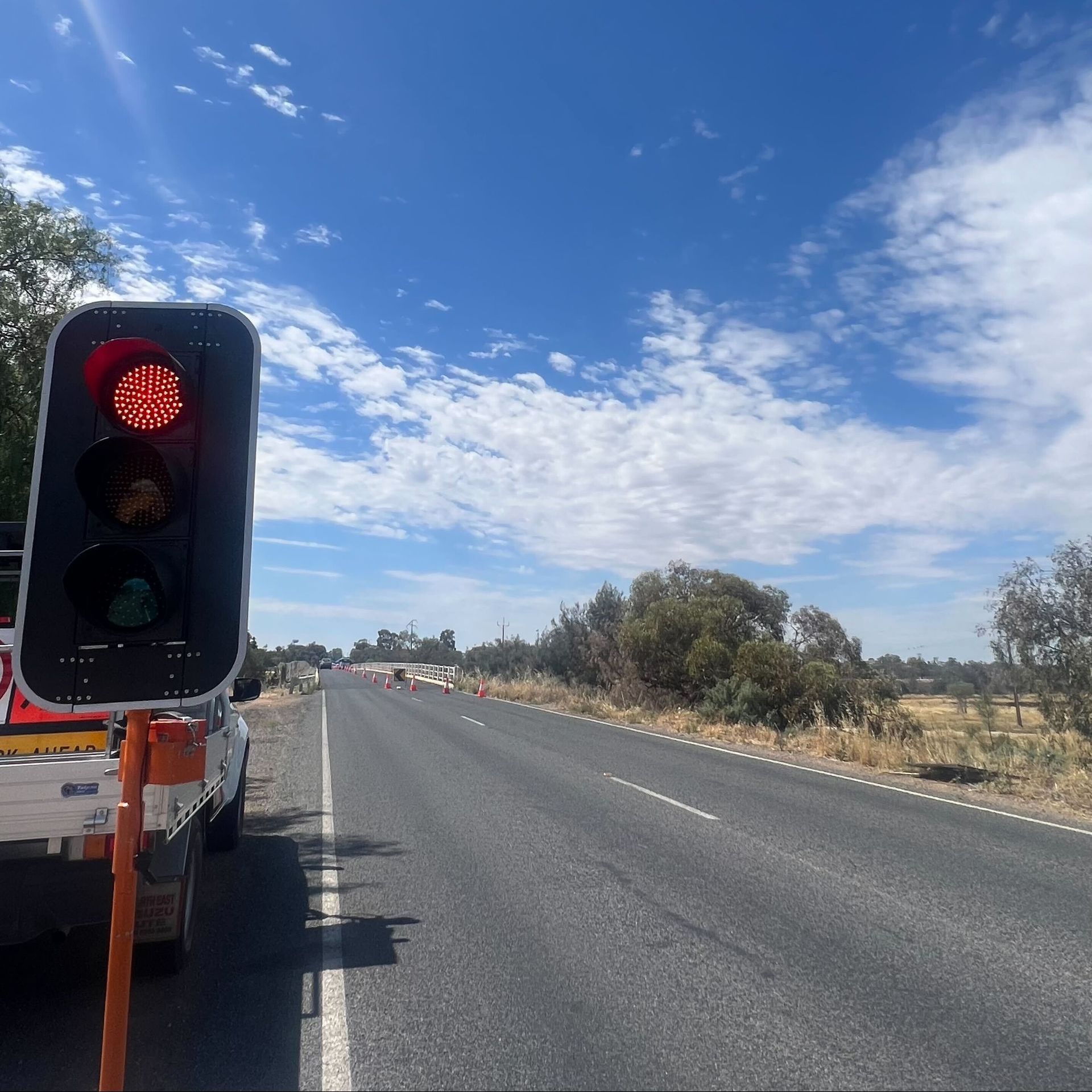
- portable or temporary traffic signals
- arrow boards
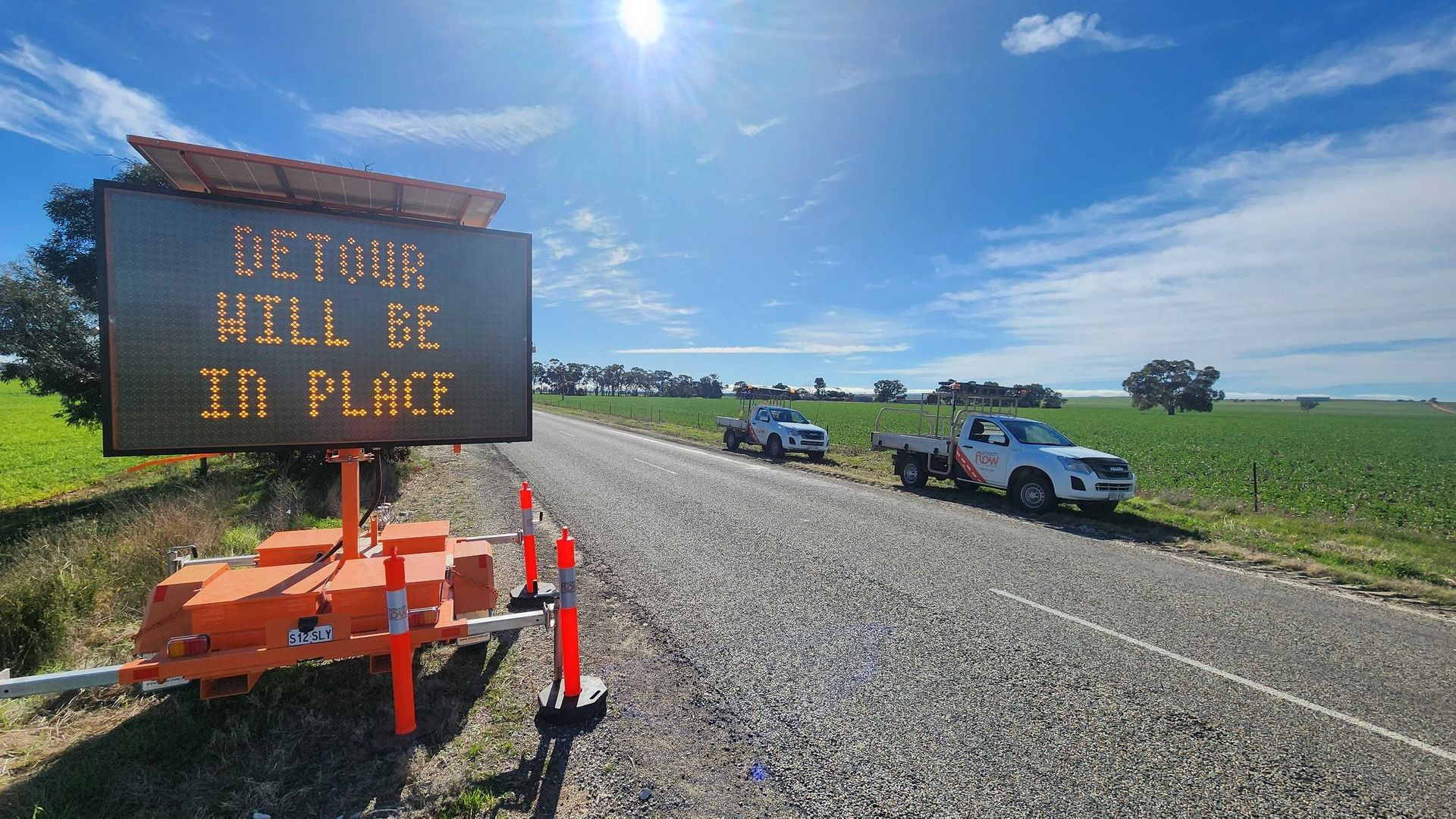
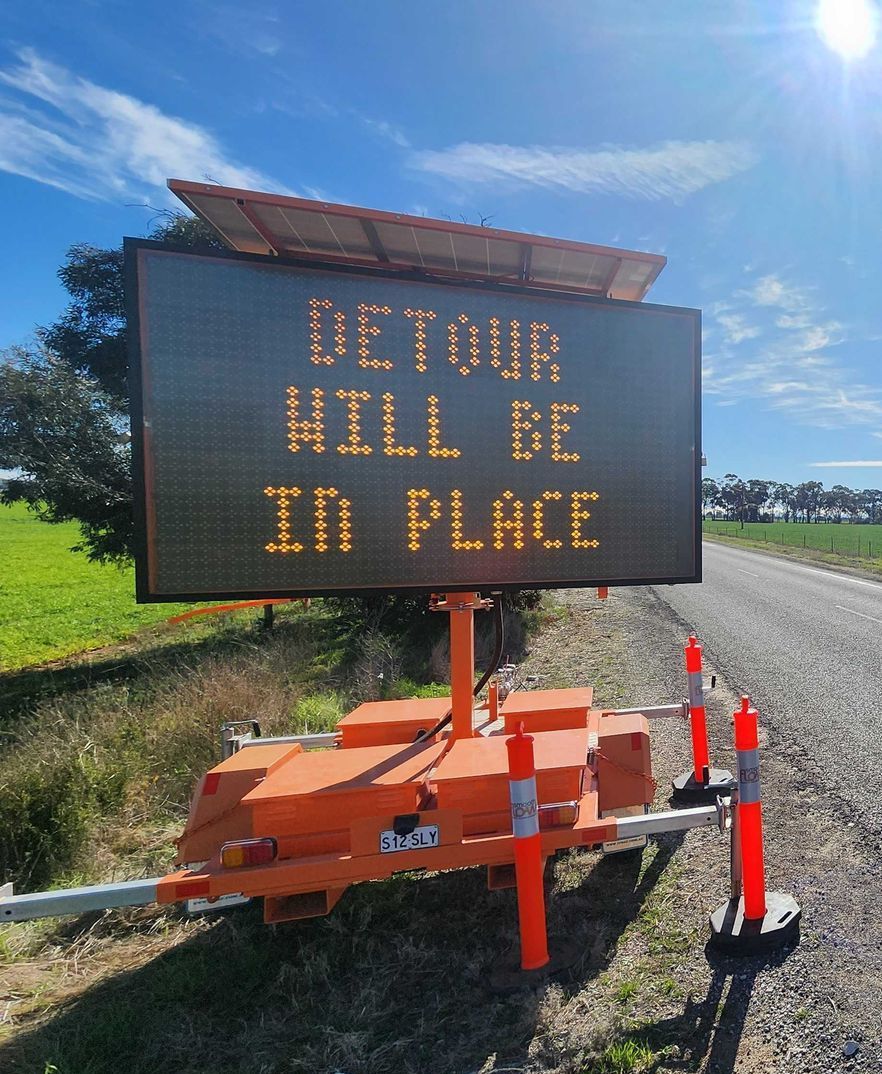
- variable message signs
- lane closures and tapers
- pedestrian routes and crossings
- work areas and safety zones
DIT's South Australian supplement to AS 1742.3 requires traffic guidance schemes to be available for viewing at the worksite, whether they are provided in hardcopy or electronic form.
The TGS therefore gives the people implementing the traffic controls a clear site-specific layout to work from. The broader traffic control service then puts the approved arrangements into practice using the required crews, signs, devices, and traffic control methods.
What is the main difference between a TMP and a TGS?
The simplest way to distinguish the two is to think of the TMP as the overall strategy and the TGS as the site layout.
A traffic management plan explains how traffic will be managed. It considers the project as a whole, the risks involved, how different road users will be accommodated, how access will work, and how traffic arrangements may change during the project.
A traffic guidance scheme shows how the traffic controls will be set out. It focuses on a particular worksite or stage and identifies the arrangement of signs, devices, traffic controllers, lane changes, temporary signals, and other physical controls.
For a simple short-duration activity, a suitable TGS may be enough to document the required arrangement. A larger or more complex construction project may need a broader TMP supported by one or more TGS drawings for different stages, locations, or traffic conditions.
Does a traffic management plan include a traffic guidance scheme?
It can. For more complex works, a TMP may be supported by one or several TGS drawings that show how the strategy will be implemented at individual work areas or during different stages.
For example, a civil project might have one overall TMP that addresses site access, truck movements, pedestrians, road users, detours, and project staging. Separate TGS drawings could then show the physical traffic control layout required for an initial lane closure, a later road crossing, and another stage involving temporary traffic signals.
This approach allows the broader traffic strategy to remain coordinated while the worksite layouts reflect what is actually happening at each stage.
When might a traffic guidance scheme be required?
A TGS may be needed when works or activities change the normal road environment and temporary traffic control devices are required. The exact requirements depend on the road authority and the project.
Examples can include:
- lane closures for road or utility works
- temporary stop and slow arrangements
- work beside a live traffic lane
- footpath or pedestrian diversions
- temporary traffic signals
- construction vehicle access from a public road
- road maintenance and inspections
- temporary detours or diversions
- events that change normal traffic conditions
For roads managed by South Australia's Department for Infrastructure and Transport (DIT), the Roadworks Portal guidance states that a road-space permit application must include either a TMP or a TGS. The correct documentation will depend on the proposed work and its complexity.
When is a broader traffic management plan more appropriate?
A TMP becomes more useful as the number of traffic risks, project stages, stakeholders, and road-user impacts increases. It provides a structure for considering the complete traffic management task rather than looking only at individual signs and devices.
A broader plan may be appropriate where works involve:
- multiple construction stages
- significant changes to normal traffic flow
- long-duration roadworks
- several work areas or access points
- heavy vehicle or plant movements
- complex pedestrian and cyclist arrangements
- detours affecting the surrounding road network
- busy intersections or higher-volume roads
- regional or high-speed road environments
- coordination with councils, DIT, emergency services, or other stakeholders
The plan should be proportionate to the work. A traffic management document that is appropriate for a minor roadside activity will not necessarily be suitable for a staged civil construction project affecting a major road corridor.
What about a traffic control plan?
Traffic control plan is another term that can cause confusion because terminology is not always used consistently between jurisdictions, authorities, and businesses. In some contexts, it may be used to describe the site-specific drawing that performs a similar role to a traffic guidance scheme.
For South Australian workzone traffic management, it is useful to follow the terminology used in the current DIT and Austroads framework and confirm exactly which document the relevant authority expects. If an application or project brief asks for a TMP, TGS, or another specified traffic plan, the document should be prepared to meet that requirement rather than relying on the name alone.
What standards apply to TMPs and TGSs in South Australia?
South Australia now uses the Austroads Guide to Temporary Traffic Management as the primary national reference for temporary traffic management. This is supported by the South Australian Standards for Workzone Traffic Management and the state's supplement to AS 1742.3.
DIT advises that South Australian temporary traffic management must account for the relevant national guidance as well as the state's specific legislation, standards, and conditions. The department maintains its current documents through its South Australian traffic management documents page.
These requirements matter because traffic management is not simply a matter of choosing a standard drawing. Site conditions, road category, speed environment, traffic volumes, road users, work activities, and project risks all need to be considered.
Are the requirements for preparing a TGS changing?
Yes. This is an important upcoming change for South Australian projects.
DIT states that its Traffic Control Devices for Workzone Traffic Management Field Guide will be withdrawn from February 2027 . From that point, Traffic Guidance Schemes will need to be prepared by a qualified Traffic Management Designer.
For contractors planning works that will continue into 2027 or commence after the change, it is worth confirming the applicable designer and documentation requirements early. DIT also advises users to rely on the live versions of its standards and guidance because temporary traffic management requirements can be updated.
Can a TGS be reused on another worksite?
Traffic guidance schemes need to reflect the actual conditions of the worksite where they are being used. Roads can differ in speed, width, traffic volume, sight distance, intersections, pedestrian activity, access points, and other constraints.
A layout that suits one site may therefore be inappropriate at another. Even where the type of work is similar, the traffic control arrangement should be assessed against the conditions and requirements of the new location.
This is one reason site-specific planning is important. The controls shown on the TGS should correspond with the road environment and the way the work will actually be carried out.
Does the TMP or TGS need to be reviewed during the job?
Traffic arrangements should continue to suit the conditions on site. If the work changes, a construction stage moves, traffic conditions are different from those anticipated, or the existing controls are no longer appropriate, the relevant documentation may need to be reviewed and updated.
Monitoring the worksite also helps identify issues such as unexpected queues, restricted sight distance, pedestrian conflicts, changed access requirements, or other conditions that may not have been apparent during planning.
Smooth Flow's traffic management services support the practical implementation of project traffic arrangements across urban, regional, and remote South Australia.
Frequently asked questions about TMPs and TGSs
Is a TGS the same as a TMP?
No. A TGS generally shows the site-specific arrangement of traffic control devices, while a TMP provides the broader strategy for managing traffic-related risks and movements across the project. A TMP may be supported by one or more TGS drawings.
Do I need both a TMP and TGS?
Not necessarily. The documents required depend on the project and the relevant authority. For DIT road-space permit applications, current guidance requires either a TMP or a TGS to be included. More complex projects may use a broader TMP together with TGS drawings for specific work stages.
Who decides which traffic plan is required?
The road or asset owner, permit authority, project requirements, and applicable standards can all influence the documentation required. For work affecting a public road, identify the responsible road authority early and confirm its requirements before preparing the plan.
Should a traffic plan be prepared before crews and equipment are booked?
Ideally, traffic planning should be considered early enough to identify the approvals, traffic controllers, signs, temporary signals, message boards, and other resources the work may need. Leaving this until immediately before mobilisation can create avoidable coordination issues.
Choosing the right traffic planning approach for your project
The key difference is straightforward: a TMP addresses the overall traffic management strategy, while a TGS shows the physical traffic control arrangement for a particular worksite or stage. Which document is required depends on the work, the road environment, project complexity, and the requirements of the relevant authority.
If you are planning roadworks, civil construction, an event, or another project that will affect traffic in South Australia, contact our team to discuss your traffic planning requirements. Smooth Flow can help you identify an appropriate planning and traffic control approach before work begins.